How I Learned to Manage My Blood Pressure — A Real Talk on Recovery and Daily Wins
High blood pressure isn’t just a number on a screen — it’s a wake-up call. For years, I ignored the signs until a routine check revealed I was in the danger zone. What followed wasn’t a quick fix, but a journey of small, consistent changes. Through rehabilitation strategies that focused on lifestyle, movement, and mindset, I began to see real improvements. This is not a miracle story — it’s about what happens when you commit to your health every single day. Always consult your doctor, but know this: change is possible.
The Moment Everything Changed
It happened during a regular visit to the doctor’s office, the kind most people schedule just to stay up to date. No chest pain, no dizziness, no alarming symptoms — just a quiet, ordinary day. But when the nurse called out the reading — 158 over 96 — something inside shifted. That number was not normal. It wasn’t even close. The doctor said, “We need to talk,” and in that moment, the reality set in: high blood pressure had been working silently in the background, like a slow leak in a pipe you didn’t know was there.
High blood pressure, or hypertension, is often called the “silent killer” because it usually has no obvious signs. You don’t feel it the way you feel a fever or an injury. Yet over time, it can damage the heart, kidneys, and blood vessels, increasing the risk of serious health events. For many, including myself, the diagnosis comes as a shock precisely because life feels unchanged. The danger lies in that false sense of wellness. Just because you feel fine doesn’t mean your body isn’t under strain.
What I didn’t realize at the time was that this condition affects nearly half of all adults in many developed countries. Yet only about one in four have it under control. That gap isn’t just about access to care — it’s often about awareness. Many people believe that if they’re not experiencing symptoms, there’s nothing to worry about. But hypertension doesn’t wait for symptoms to appear before causing harm. It’s not a future risk; it’s a present condition. The moment of diagnosis, for me, wasn’t the beginning of an illness — it was the beginning of awareness. And that awareness became the foundation for everything that followed.
Understanding Blood Pressure: More Than Just a Number
When you hear your blood pressure reading, it’s given as two numbers — for example, 120 over 80. The top number, systolic pressure, measures the force your heart exerts when it beats. The bottom number, diastolic pressure, measures the pressure in your arteries when your heart rests between beats. Think of it like water moving through a garden hose: when the tap is on, pressure rises; when it’s off, pressure drops. Your blood vessels respond similarly. But when the pressure is consistently too high, the system begins to wear down.
Over time, elevated pressure can cause the walls of the arteries to thicken and stiffen, a condition known as arteriosclerosis. This makes it harder for blood to flow smoothly, forcing the heart to work harder with each beat. It’s like asking a car engine to run at high speed for years without maintenance — eventually, parts begin to fail. The heart muscle may enlarge, reducing its efficiency. Tiny tears can form in the artery walls, creating spots where plaque builds up, increasing the risk of blockages.
What many don’t understand is that high blood pressure doesn’t operate in isolation. It’s closely linked to other health concerns, including heart disease, stroke, and kidney problems. It can affect vision, sexual health, and even cognitive function over time. Yet because the damage happens gradually, it’s easy to underestimate the urgency. The good news is that blood pressure is one of the most manageable risk factors we have. Unlike genetics or age, it responds directly to daily choices. Medication can help, but so can what you eat, how you move, and how you manage stress. Understanding blood pressure isn’t about memorizing numbers — it’s about recognizing it as a signal from your body, asking for attention and care.
Rehabilitation Beyond the Hospital: Redefining Recovery
When I first heard the word “rehabilitation,” I thought of physical therapy after surgery or cardiac rehab following a heart attack. I didn’t see myself in that picture. I hadn’t had a major event — just a high reading and a warning. But my doctor explained that rehabilitation isn’t only for recovery from crisis; it can also be a proactive strategy to prevent one. That changed my perspective. I began to see that managing blood pressure wasn’t just about avoiding medication — it was about rebuilding habits in a way that supported long-term health.
Rehabilitation, in this context, means creating a structured, supported plan to improve cardiovascular health. It’s not a short-term fix but a shift in how you live. This might include working with a team: a primary care provider to monitor progress, a nutritionist to guide food choices, and possibly a physical therapist or exercise specialist to design safe routines. Some communities offer formal lifestyle medicine programs that combine education, movement, and behavioral support — all aimed at reducing risk factors like hypertension.
What makes this kind of rehabilitation powerful is its focus on sustainability. Instead of drastic diets or intense workouts that fade after a few weeks, it emphasizes small, realistic changes that can last a lifetime. It’s not about punishment or restriction — it’s about empowerment. You learn to listen to your body, understand your triggers, and respond with care. For someone juggling family, work, and personal responsibilities, this approach feels doable. It meets you where you are, not where you “should” be. And over time, these supported changes become second nature — not because you’re forcing yourself, but because you begin to feel the benefits in your energy, mood, and overall well-being.
Movement That Works: Exercise as Medicine
One of the first recommendations I received was simple: move more. But “move” is a broad word. What kind of movement? How much? How hard? The truth is, not all exercise has to be intense to be effective. For lowering blood pressure, the most powerful forms of movement are often the most accessible: walking, light strength training, stretching, and low-impact aerobic activities like swimming or cycling. The goal isn’t to train for a marathon — it’s to build consistency.
Regular physical activity helps lower blood pressure in several ways. It improves circulation, making it easier for blood to flow through the vessels. It strengthens the heart, so it doesn’t have to work as hard to pump blood. It also helps reduce arterial stiffness, which plays a major role in hypertension. Studies show that people who engage in moderate-intensity exercise for 30 minutes most days of the week can see meaningful reductions in both systolic and diastolic pressure — sometimes as much as 5 to 8 points, which is comparable to some medications.
For me, walking became the foundation. I started with 10 minutes a day, then gradually increased to 30. I didn’t track every step or wear a fitness watch — I just made it a habit, like brushing my teeth. On days when energy was low, I still moved, even if it was just around the house or up and down the driveway. Over time, I added resistance bands for light strength work twice a week, focusing on major muscle groups. The key was to avoid overexertion. Pushing too hard can actually raise blood pressure temporarily, which is risky for someone already in the high range. The focus was on rhythm, breathing, and feeling connected to my body — not on speed or intensity.
What surprised me most was how movement began to affect other areas of life. I slept better. My mood improved. I felt more in control. Exercise wasn’t just changing my numbers — it was changing how I experienced each day. And because I found joy in it — walking in the morning light, listening to birds, feeling the breeze — it never felt like a chore. That’s the secret: when movement becomes something you look forward to, not something you have to do, it sticks.
Eating for Stability: The Food-Pressure Connection
If movement was one pillar, food became the other. I quickly learned that what I put on my plate had a direct impact on my blood pressure. Sodium, in particular, played a major role. Most people consume far more salt than they need — often without realizing it. Processed foods, canned soups, frozen meals, and even bread can be loaded with hidden sodium. Reducing salt intake is one of the most effective dietary changes for lowering blood pressure, but it doesn’t mean food has to be bland.
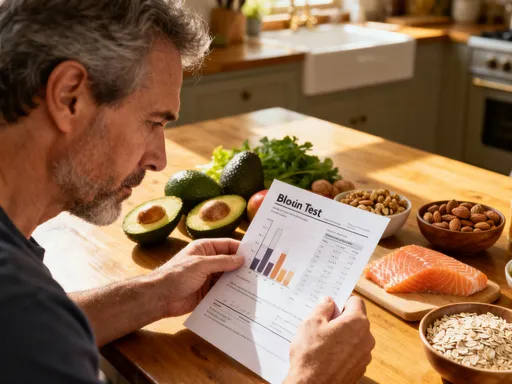
I began by reading labels and choosing fresh or frozen vegetables without added sauces. I cooked more at home, where I could control ingredients. Simple swaps made a difference: using herbs and spices like garlic, basil, and cumin instead of salt; choosing whole grains over refined ones; eating more fruits and vegetables, which are rich in potassium — a mineral that helps balance sodium levels in the body. Potassium-rich foods like bananas, sweet potatoes, spinach, and beans became regular parts of my meals.
One change that had an immediate effect was cutting back on restaurant meals and takeout. While convenient, these often contain high levels of sodium, unhealthy fats, and large portions. I didn’t eliminate them completely — life is about balance — but I made them the exception, not the rule. I also paid attention to portion sizes. Even healthy foods can contribute to weight gain if eaten in excess, and carrying extra weight increases the workload on the heart.
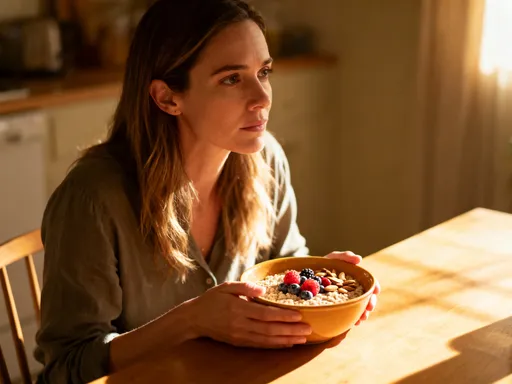
What helped most was shifting my mindset from restriction to nourishment. Instead of thinking, “I can’t eat that,” I began to ask, “What can I add?” More color to my plate. More fiber. More variety. This approach felt positive and sustainable. Over time, my taste buds adjusted. Foods I once loved — salty snacks, processed meats — began to taste too strong. My body was telling me what it needed, and I was finally learning to listen.
Mind and Body: Stress, Sleep, and Silent Triggers
As I made progress with movement and food, I realized there were other, less visible factors at play. Stress, for example, was a constant companion — the kind that builds slowly from daily responsibilities, deadlines, and family demands. I didn’t think of it as a health risk until I learned how deeply it affects blood pressure. When you’re stressed, your body releases hormones like cortisol and adrenaline, which cause your heart to beat faster and your blood vessels to constrict. This is helpful in short bursts — like when you need to react quickly — but when stress is chronic, the effect is like leaving a faucet running nonstop.
Sleep, too, turned out to be a major player. I used to think of sleep as passive — just “resting.” But research shows that poor or insufficient sleep can disrupt the body’s natural regulation of stress hormones and blood pressure. During deep sleep, blood pressure naturally dips — a process called nocturnal dipping. When that doesn’t happen consistently, the cardiovascular system doesn’t get the nightly reset it needs. Over time, this contributes to sustained high pressure.
To address this, I began building a wind-down routine. I turned off screens an hour before bed, lowered the lights, and practiced deep breathing or gentle stretching. I also started spending more time outdoors during the day, especially in natural light, which helps regulate the body’s internal clock. On stressful days, I used simple techniques like box breathing — inhaling for four counts, holding for four, exhaling for four, and pausing for four — to calm my nervous system.
These changes didn’t eliminate stress, but they changed my relationship to it. I became more aware of my body’s signals — tension in my shoulders, shallow breathing, irritability — and learned to respond before things escalated. Emotional well-being, I realized, wasn’t separate from physical health. It was part of the same system. When the mind is at ease, the body often follows.
Building a Life That Supports Health
Managing blood pressure isn’t about perfection — it’s about creating a life where healthy choices are the easiest choices. That means designing your environment to support your goals. For me, that looked like keeping fresh fruit on the counter, stocking the pantry with whole grains and beans, and scheduling walks like appointments. It meant involving my family, so meals became shared efforts and movement became time together.
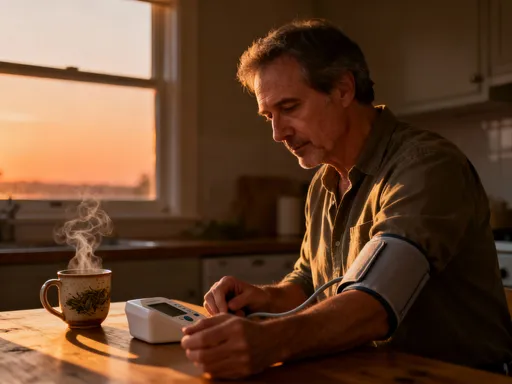
Routine monitoring also became part of my life. I bought a home blood pressure monitor and started checking my numbers once a week, at the same time of day, under similar conditions. This wasn’t about obsession — it was about awareness. Seeing trends over time helped me understand what worked and what didn’t. If my numbers crept up, I could look back at recent changes — less sleep, more stress, a string of takeout meals — and make adjustments.
Social support played a quiet but powerful role. Talking with friends who were also making health changes created a sense of accountability and encouragement. My doctor remained a steady partner, reviewing my progress and adjusting recommendations when needed. This wasn’t a solo journey — it was a team effort.
The biggest shift was internal. I stopped seeing health as something I had to “fix” and started seeing it as something I was building — day by day, choice by choice. There were setbacks, of course. Busy weeks, holidays, unexpected stress — all tested my habits. But I learned to respond with compassion, not criticism. One missed walk or one salty meal didn’t erase progress. What mattered was returning to the routine, without guilt.
Over time, the numbers improved. My last reading was 124 over 78 — solidly in the healthy range. But more than the number, I noticed how I felt: more energy, better sleep, a greater sense of calm. The journey didn’t transform me into someone new — it helped me reconnect with the version of myself I’d neglected for too long.
Blood pressure management is less about drastic changes and more about daily commitment. Rehabilitation isn’t a phase — it’s a mindset. By making informed choices, staying connected to care, and treating your body with respect, you can live fully while staying in control. This journey isn’t easy, but it’s worth it. Always consult your doctor — and remember, small steps lead to big results.