How Pilates Rewired My Mind and Body—A Pro’s Take on Mental Balance
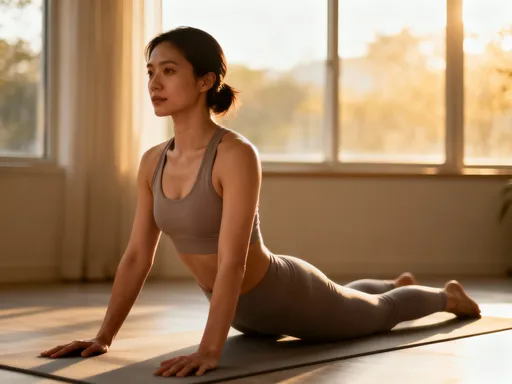
For years, I chased mental clarity through meditation and diet, but nothing shifted the needle like Pilates did. As a fitness professional, I was skeptical—until I experienced how deeply it calms the nervous system. It’s not just about core strength; it’s about creating space in your mind by aligning your body. This isn’t magic, it’s biomechanics meets mindfulness. If you’re feeling mentally scattered or emotionally tense, the answer might not be on a therapist’s couch—but on a mat.
The Hidden Link Between Movement and Mental Clarity
Modern science increasingly confirms what ancient practices have long suggested: the body and mind are not separate entities but parts of a single, responsive system. Physical movement, particularly when performed with awareness, has a profound impact on brain chemistry, emotional regulation, and cognitive performance. Pilates, though often categorized as a physical conditioning method, operates at the intersection of neuroscience and somatic education. Its deliberate pacing, breath coordination, and focus on precision stimulate the parasympathetic nervous system—the body’s natural “brake pedal” for stress. This shift from a state of constant alertness to one of calm engagement allows the brain to reset, improving clarity, focus, and emotional resilience.
Studies have shown that mind-body exercises like Pilates can enhance executive function, the mental processes responsible for planning, attention, and self-control. A 2016 study published in the journal Complementary Therapies in Clinical Practice found that women who practiced Pilates twice weekly for 12 weeks reported significant reductions in anxiety and perceived stress, along with measurable improvements in mood. Researchers attribute these benefits not only to physical activity but to the meditative quality of the practice. Each movement is performed with intention, requiring the practitioner to stay present, which strengthens neural pathways associated with mindfulness and emotional regulation.
What sets Pilates apart from other forms of exercise is its emphasis on neuromuscular control—the communication between the brain and muscles. This high level of engagement fosters what scientists call “interoception,” or the ability to sense internal bodily states. Improved interoception is linked to better emotional awareness and regulation, reducing the likelihood of reactive or impulsive behavior. When individuals become more attuned to subtle shifts in their posture, breathing, or muscle tension, they gain early warning signals for rising stress, allowing them to intervene before emotions escalate. In this way, Pilates becomes not just a workout, but a daily practice in self-awareness and mental hygiene.
Why Modern Life Disrupts Psychological Balance
Life in the 21st century is defined by constant stimulation, prolonged sitting, and emotional demands that rarely allow for recovery. The average person spends over eight hours a day in a seated position, often hunched over screens, which leads to what health professionals call “postural collapse.” This physical compression—rounded shoulders, forward head, tight hips—is not merely an aesthetic concern. It directly affects breathing mechanics, reduces circulation to the brain, and signals the nervous system to remain in a low-grade state of alarm. Over time, this physical tension becomes mirrored in mental and emotional patterns: irritability, fatigue, difficulty concentrating, and a sense of being emotionally “overwhelmed.”
Consider the common experience of the mid-afternoon slump. You’ve been at your desk for hours, responding to emails, juggling deadlines, and perhaps skipping lunch. Your breath is shallow, your shoulders are tense, and your mind feels foggy. This is not simply a lack of caffeine or sleep—it’s a physiological response to sustained stress and poor alignment. The body, starved of oxygen and movement, sends distress signals that manifest as mental fatigue. Similarly, disrupted sleep patterns, often caused by evening screen use and mental overactivity, further erode psychological balance. The brain never truly “switches off,” making rest elusive and recovery incomplete.
Moreover, the digital environment amplifies emotional volatility. Constant notifications, social comparison, and information overload keep the brain in a state of hyperarousal, dominated by the sympathetic nervous system. This chronic activation depletes mental resources and diminishes the capacity for calm, reflective thinking. Without intentional practices to counterbalance this, individuals become increasingly reactive, losing access to the deeper, wiser parts of themselves. Pilates offers a direct antidote: a structured yet gentle way to interrupt the cycle of stress, restore physical alignment, and create space for mental clarity to return.
What Sets Pilates Apart from Other Workouts
In a world saturated with fitness trends—from high-intensity interval training to power yoga—Pilates stands out for its quiet power and precision. Unlike workouts designed to push the body to exhaustion, Pilates emphasizes control, alignment, and mindful movement. It does not rely on speed or heavy loads but on the quality of motion and the engagement of deep stabilizing muscles. This focus on neuromuscular efficiency makes it uniquely suited for individuals seeking not just physical strength, but mental calm and emotional stability.
When compared to high-intensity training, Pilates produces a markedly different physiological response. While HIIT elevates cortisol, the primary stress hormone, Pilates has been shown to reduce it. A 2020 study in the Journal of Sports Science & Medicine found that participants who practiced Pilates for eight weeks experienced significant decreases in cortisol levels and perceived stress, whereas those in a high-intensity group saw increases in both. This distinction is critical for individuals already living under high stress, as adding more physical strain can exacerbate mental fatigue rather than alleviate it.
Even when compared to yoga, Pilates offers a different pathway to mindfulness. While both disciplines integrate breath and movement, Pilates places greater emphasis on spinal articulation, core integrity, and functional alignment. Its six foundational principles—concentration, control, centering, precision, flow, and breath—mirror the core components of mindfulness practice. Concentration requires full attention on each movement. Control prevents momentum from taking over, ensuring deliberate action. Centering directs focus to the body’s core, often referred to as the “powerhouse,” which in Pilates is both a physical and energetic anchor. These principles, when practiced consistently, train the mind to stay present, reduce mental chatter, and cultivate a sense of inner stability.
The role of the instructor in Pilates is also distinct. Rather than leading a large class through a scripted sequence, a skilled Pilates teacher acts as a guide to internal awareness, offering hands-on cues and personalized feedback. This individualized attention helps practitioners tune into subtle sensations, correct imbalances, and develop a deeper relationship with their bodies. Over time, this fosters a sense of self-trust and embodiment, qualities that are essential for long-term mental well-being.
The Six Core Mechanisms That Boost Mental Balance
Pilates supports mental balance through a combination of physiological, neurological, and psychological mechanisms. Each of these operates quietly but powerfully, reinforcing the other to create a cumulative effect on well-being. Understanding these mechanisms can help individuals appreciate Pilates not as a mere exercise routine, but as a holistic practice for mental resilience.
First, regulated breathing calms the limbic system, the brain’s emotional center. In Pilates, breath is not an afterthought but a foundational element. The practice teaches lateral and posterior breathing—expanding the ribs to the sides and back while keeping the abdominal wall engaged. This type of breathing increases oxygen delivery to the brain, reduces heart rate, and signals safety to the nervous system. When the body feels safe, the mind follows, allowing for greater emotional regulation and reduced anxiety.
Second, mindful movement enhances interoception. Every Pilates exercise requires attention to subtle shifts in muscle activation, joint position, and weight distribution. This constant feedback loop strengthens the brain’s ability to sense internal states, a skill linked to emotional intelligence. Individuals who practice Pilates regularly often report a heightened sense of bodily awareness, which helps them recognize stress before it escalates and respond with greater intention.
Third, improved posture boosts confidence and reduces stress hormones. Poor posture is not only a symptom of stress but a contributor to it. Slouching compresses the lungs, restricts diaphragmatic movement, and triggers the release of cortisol. Pilates corrects postural imbalances by strengthening the deep core muscles, aligning the spine, and opening the chest. As the body assumes a more upright, balanced position, the brain receives signals of strength and readiness, which in turn enhances mood and self-assurance.
Fourth, rhythmic repetition induces a meditative state. The flowing sequences in Pilates, such as the “Hundred” or “Roll-Up,” create a natural rhythm that can quiet the mind. The repetition of controlled movements, synchronized with breath, produces a trance-like focus similar to meditation. This state of “flow” allows the practitioner to disengage from external distractions and internal rumination, creating mental space for clarity and calm.
Fifth, body awareness reduces dissociation. Many individuals, especially those with chronic stress or trauma, experience a sense of disconnection from their bodies. Pilates gently reestablishes this connection by encouraging slow, intentional movement and sensory feedback. This reintegration helps reduce feelings of numbness or emotional detachment, fostering a greater sense of presence and aliveness.
Sixth, mastery builds self-efficacy. Learning and refining Pilates exercises provides a tangible sense of progress. As individuals gain control over their movements, they also develop confidence in their ability to influence their physical and mental states. This sense of agency is a powerful antidote to helplessness and anxiety, reinforcing the belief that change is possible through consistent effort.
Building a Sustainable Practice: From Beginner to Consistent
Starting a Pilates practice can feel intimidating, especially for those unfamiliar with its principles or unsure of where to begin. The key to success lies not in intensity but in consistency and patience. Unlike crash fitness programs that promise rapid results, Pilates rewards gradual, mindful progress. For beginners, the most important step is to find a qualified instructor who can provide personalized guidance and ensure proper form.
One of the first decisions is whether to begin with mat or reformer Pilates. Mat classes require only a cushioned surface and are accessible to most people. They focus on bodyweight exercises that build core strength, flexibility, and coordination. Reformer classes use a specialized apparatus with springs and resistance, offering more support and feedback, which can be especially helpful for individuals with injuries or limited mobility. Both formats are effective, and many practitioners eventually incorporate both into their routine.
When choosing a studio or instructor, look for certifications from recognized organizations such as the Pilates Method Alliance. A good teacher will assess your individual needs, modify exercises as necessary, and emphasize alignment over speed or repetition. It’s also important to set realistic expectations. Physical changes may take weeks to become noticeable, but mental shifts—such as improved focus, reduced anxiety, or better sleep—can emerge much sooner. Keeping a simple journal to track these subtle changes can provide motivation and insight.
Integrating Pilates into a busy schedule requires planning but not perfection. Even two 30-minute sessions per week can yield meaningful benefits. Some find it helpful to practice short sequences at home, such as pelvic tilts, spine stretches, or breath work, to reinforce what they’ve learned in class. The goal is not to achieve mastery overnight but to build a sustainable habit that supports long-term mental and physical health.
Who Benefits Most—and Who Should Seek Support
Pilates is remarkably inclusive, offering benefits to a wide range of individuals. Those in high-pressure professions, such as teachers, healthcare workers, or executives, often find it an essential tool for managing stress and maintaining focus. Athletes recovering from injury appreciate its rehabilitative qualities, which restore strength without strain. People with chronic pain, particularly in the back or neck, frequently experience relief through improved alignment and muscle balance.
However, it is important to recognize that while Pilates can significantly enhance mental well-being, it is not a substitute for professional mental health care. Individuals experiencing clinical anxiety, depression, or trauma should continue to work with licensed therapists and follow prescribed treatment plans. Pilates can be a valuable complement to therapy, providing a somatic outlet for emotional release and a means of grounding the nervous system, but it should not replace evidence-based interventions.
Safety is also a priority. Those with specific medical conditions, such as osteoporosis, joint instability, or recent surgery, should consult their healthcare provider before beginning Pilates. A knowledgeable instructor can adapt exercises to accommodate limitations and ensure a safe, effective practice. The goal is not to push through pain or discomfort but to move with awareness and respect for the body’s signals.
Realistic expectations are crucial. Pilates is not a quick fix. It does not promise to erase stress or eliminate emotional challenges. Instead, it offers a framework for building resilience, self-awareness, and balance. Progress is often subtle—a quieter mind, a more relaxed breath, a stronger sense of presence. These small shifts, accumulated over time, can lead to profound changes in how one navigates life’s demands.
Beyond the Studio: Carrying Pilates Into Daily Life
The true power of Pilates lies not in the hour spent on the mat but in how its principles translate to everyday living. Once internalized, the habits of alignment, breath, and intention become tools for maintaining mental balance in the midst of daily challenges. Simple practices can be woven into routine moments: sitting at a desk, standing in line, or walking through a parking lot.
One effective habit is the “postural reset.” Several times a day, pause to check your alignment. Are your shoulders relaxed? Is your head balanced over your spine? Are your feet grounded? A few seconds of mindful adjustment can interrupt the cycle of physical and mental tension. Pairing this with a slow, deep breath amplifies the calming effect, signaling the nervous system to shift into a state of ease.
Another practice is the “breath check.” When feeling overwhelmed, take three conscious breaths, focusing on expanding the ribs laterally. This simple act can create a mental pause, allowing for a more thoughtful response rather than a reactive one. Over time, these micro-moments of awareness accumulate, strengthening the brain’s capacity for self-regulation.
Walking, too, can become a form of moving meditation. Instead of rushing from one task to the next, walk with intention—feeling each foot strike, engaging the core, breathing rhythmically. This transforms a mundane activity into an opportunity for presence and calm. The principles of Pilates, when lived beyond the studio, become a quiet but constant source of stability in an unpredictable world.
Pilates isn’t just reshaping bodies—it’s recalibrating minds. By uniting movement with awareness, it offers a sustainable path to psychological balance in an unbalanced world.