Hiking Gozo’s Hidden Trails Where Ancient Stones Tell Stories
You know that feeling when nature and history collide in the most unexpected way? That’s Gozo. This island isn’t just about crystal-clear waters—it’s a hiker’s dream woven with thousand-year-old stone structures perched on cliffs, tucked in valleys, and standing alone under endless skies. I walked paths where every turn revealed something surreal: temples older than the pyramids, farmhouses carved into rock, and villages that time forgot. This is not just hiking—it’s time travel with blisters. The air carries whispers of ancient rituals, the scent of wild thyme crushed underfoot, and the quiet hum of a land that has witnessed civilizations rise and fade. Gozo doesn’t shout its wonders; it reveals them slowly, to those willing to walk, pause, and listen.
Why Gozo? The Island That Time (Almost) Forgot
Gozo, the quieter sister of Malta, offers a rare blend of serenity and historical depth that few Mediterranean islands can match. While its larger neighbor bustles with urban energy and cruise-ship crowds, Gozo remains rooted in a slower rhythm of life—where farmers still tend terraced fields by hand, and village churches ring their bells with predictable calm. This isn’t a place designed for hurried tourism; it’s a landscape meant to be traversed on foot, where every path leads not just to a view, but to a story. Its compact size—just 67 square kilometers—makes it ideal for hikers, allowing multi-day exploration without the strain of long transfers or overcrowded trails.
What sets Gozo apart is how seamlessly its built environment merges with the natural one. Limestone cliffs drop dramatically into the Mediterranean, their golden hues shifting with the sun’s arc. Between them, valleys cradle dry-stone-walled fields, remnants of an agricultural system that has changed little in centuries. Traditional villages perch atop hills like sentinels, their white-washed houses and domed churches glowing against the rugged terrain. Unlike many tourist destinations where history is boxed into museums, in Gozo, it’s embedded in the soil, in the walls, in the very paths beneath your boots.
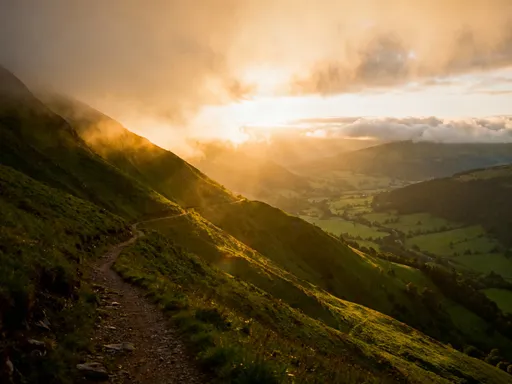
The island’s geography naturally lends itself to hiking. Coastal trails wind along sea cliffs, offering panoramic views of turquoise coves and distant horizons. Inland routes traverse rolling hills dotted with abandoned farmhouses and ancient boundary walls, each turn revealing another layer of human presence. Because Gozo has avoided mass development, its trails remain largely unspoiled—free from excessive signage, commercialization, or artificial attractions. What you experience here is authenticity: the crunch of gravel underfoot, the sudden appearance of a centuries-old chapel tucked into a fold of land, the unexpected sighting of a kestrel hovering above a fallow field.
For travelers seeking depth over dazzle, Gozo delivers. It invites immersion rather than observation. There are no grand resorts lining its shores, no neon-lit promenades, no traffic-choked roads. Instead, there is space—space to walk, to reflect, to feel the weight of time in the stones around you. Whether you're following a marked trail or simply wandering a country lane, the island rewards curiosity with quiet revelations. This is not an escape from the world, but a return to a different pace of being—one where history isn’t performed, but lived.
The Temples That Predate History: Walking Among Giants
Among the most profound experiences a hiker can have in Gozo is approaching one of its megalithic temples—not by car, but on foot, through sun-baked fields and centuries-old pathways. The Ġgantija Temples in Xagħra, a UNESCO World Heritage site, are among the oldest free-standing stone structures on Earth, built around 3600 BCE—predating Stonehenge by over a millennium and the Great Pyramids of Giza by several centuries. To walk toward them across the Maltese limestone, feeling the heat rise from the ground, is to step into a timeline where human ambition first reached toward the eternal.
The name Ġgantija means “place of the giants” in Maltese, a folk explanation for how such massive stones could have been lifted and arranged without modern tools. The temple complex consists of two adjacent apses, constructed from megaliths weighing several tons, some sourced from nearby cliffs. The precision of their placement—without mortar, yet standing firm for over 5,500 years—speaks to a level of Neolithic engineering that remains astonishing. As you hike the final stretch from the village of Xagħra, passing dry-stone walls and carob trees, the temple’s mound appears like a sleeping sentinel, half-buried in the earth yet radiating presence.
What makes the journey meaningful is not just seeing the temple, but arriving at it through the same landscape its builders inhabited. You walk where they walked, under the same sun, past fields that may have once grown their food. The physical effort of the hike deepens the emotional connection—this is not a passive visit, but a pilgrimage of sorts. The temple was not built for spectacle, but for ritual, for community, for a relationship with the cosmos that we can only begin to imagine. Standing within its curved walls, you feel the weight of that mystery.
Other temple sites, such as the Għar Dalam cave and the Ta’ Ħaġrat complex near Mġarr, offer similar encounters, each revealing different facets of Neolithic life. These structures were aligned with solstices, suggesting an advanced understanding of astronomy. Some chambers may have been used for healing or initiation rites, though their exact purposes remain unknown. What is clear is that the people who built them lived in harmony with their environment, using local materials and adapting their architecture to the land’s contours. Hiking to these sites allows modern travelers to appreciate not just their age, but their integration into the island’s soul.
From Cliffs to Caves: Hiking the Xlendi to Diver’s Bay Trail
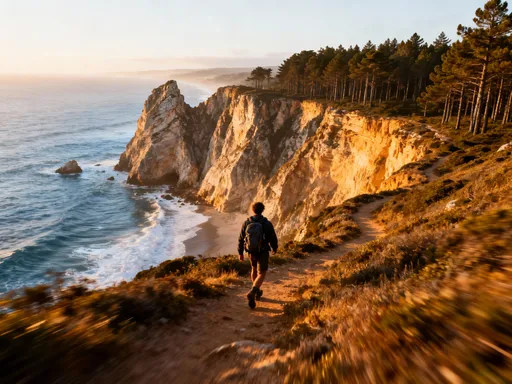
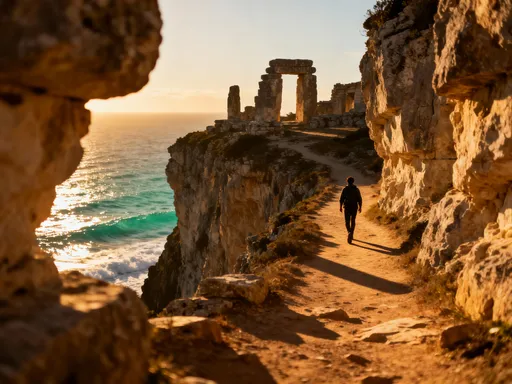
One of Gozo’s most dramatic coastal hikes is the trail from Xlendi Bay to Diver’s Bay, a route that combines natural grandeur with glimpses of ancient human adaptation. The path begins in the small fishing village of Xlendi, where pastel-colored boats bob in a sheltered cove. From here, the trail climbs steeply along the cliff edge, offering panoramic views of the Mediterranean stretching to the horizon. The limestone face drops sharply into the sea, carved by wind and water into dramatic arches and hidden grottoes.
What makes this hike unforgettable is its texture—the roughness of the path underfoot, the salty tang in the air, the sudden coolness as you pass through shaded sections carved into the rock. The route follows an old mule track, once used by fishermen and farmers to access remote coastal areas. Along the way, you’ll notice troglodyte dwellings—ancient cave homes hollowed out of the soft limestone. Some are simple recesses, others more elaborate, with multiple chambers and carved doorways. These were not shelters of desperation, but carefully chosen homes, offering natural insulation and protection from the elements.
Over time, some of these caves were repurposed. A few were converted into small chapels, their walls marked with faded religious symbols. Others served as storage for fishing gear or salt harvested from nearby pans. One cave near Diver’s Bay shows signs of a small altar, suggesting it may have been used for private devotion. The integration of these spaces into daily life reflects a deep understanding of the land—not as something to conquer, but to inhabit thoughtfully.
The descent to Diver’s Bay is steep and requires caution, especially after rain when the path can become slippery. The bay itself is a secluded cove, accessible only by foot or boat, its clear waters popular with snorkelers and divers. There are no facilities here, no cafes or sunbeds—just raw nature and the echo of waves against stone. The return hike offers a different perspective, with the sun at your back and the cliffs glowing in warm hues. Hiking this trail is not just about the destination; it’s about the dialogue between land and sea, past and present, effort and reward.
Village Heartbeats: Exploring Nadur, Xewkija, and Sannat on Foot
While Gozo’s natural beauty draws hikers, its hilltop villages offer a different kind of discovery—one rooted in community, architecture, and daily rhythm. Walking between Nadur, Xewkija, and Sannat reveals how Gozitan life has unfolded for generations, shaped by faith, agriculture, and a deep connection to place. These villages are not museum pieces; they are living communities where elderly residents still sit outside their homes in the late afternoon, children play in narrow alleys, and church bells mark the passage of time.
Nadur, perched on the eastern edge of the island, offers sweeping views toward Comino and Malta. Its name means “watchtower” in Maltese, a nod to its historical role as a lookout point. The village church, dedicated to St. Peter and St. Paul, stands at the highest point, its bell tower visible for miles. From here, hiking trails lead down into the Wied il-Għasri valley, where a natural gorge cuts through the limestone. The walk between Nadur and Xewkija takes you along country lanes bordered by dry-stone walls, some of which are centuries old. These walls, built without mortar, are a testament to a farming tradition that values patience and craftsmanship.
Xewkija is home to one of Gozo’s most iconic structures—the Rotunda of St. John the Baptist. Its massive dome, inspired by St. Peter’s Basilica in Rome, dominates the skyline and can be seen from much of the island. The church was completed in the 20th century but stands on a site of ancient religious significance. Walking through Xewkija, you notice how the golden limestone used in construction glows at sunrise and sunset, giving the village a warm, almost ethereal light. Small family-run shops sell local honey, prickly pear jam, and handmade lace—reminders of a self-sufficient economy that still thrives in pockets.
Sannat, located in the southeast, is quieter, more rural. Its church, dedicated to Our Lady of Mercy, sits at the center of a triangular village square. From here, trails lead toward the cliffs near Ras ir-Ħamrija, an area rich in prehistoric remains. Hiking through Sannat, you might pass farmers repairing walls with practiced hands, or hear the distant bleating of goats. The pace is slow, the atmosphere peaceful. These villages are not connected by public transport on convenient schedules, so walking between them allows a deeper appreciation of distance, terrain, and the effort it once took to move from place to place.
The Farmhouse Factor: When Rural Living Becomes Art
Scattered across Gozo’s countryside are traditional farmhouses—some beautifully restored, others slowly returning to the earth. These structures, known locally as *raxxatt*, were once the backbone of rural life, serving as homes, storage spaces, and animal shelters. Built from the same golden limestone as the villages, they blend seamlessly into the landscape, often surrounded by low walls called *sadjar* that enclose small plots of land. To stumble upon one hidden in a valley is to encounter a quiet dignity—a testament to a way of life that valued simplicity, self-reliance, and harmony with nature.
Most farmhouses follow a similar design: a central courtyard, arched doorways, thick walls for insulation, and flat roofs supported by wooden beams. Some include a small chapel or a cistern for rainwater collection. They were built to last, using materials found on-site, and many have stood for hundreds of years. While some have been converted into holiday homes or boutique accommodations, others remain in their original state, offering hikers a glimpse into the past without intrusion. It’s not uncommon to see an old stone mill still in place, or a fig tree growing through a collapsed wall.
What makes these farmhouses remarkable is not their grandeur, but their humility. They were not built for show, but for function. Every element served a purpose—the orientation to catch the sun, the placement to avoid strong winds, the use of local stone to regulate temperature. Walking past one on a trail, you might pause to touch the cool surface of the wall, imagining the generations who lived and worked here. In an age of fast construction and disposable design, these structures remind us of the beauty of permanence, of building with care and intention.
For modern travelers, the farmhouse is a symbol of sustainable living long before the term existed. It represents a life in tune with seasonal cycles, where food was grown on-site, water was collected from the sky, and materials were reused. Hiking through Gozo, you begin to see these buildings not as ruins, but as teachers—offering lessons in resilience, modesty, and respect for the land. They stand as quiet monuments to a forgotten ethic: that we do not own the earth, but borrow it from those who come after us.
Trail Wisdom: When to Go, What to Bring, and What to Skip
Successful hiking in Gozo depends on preparation and timing. The best seasons to visit are spring (March to May) and autumn (September to November), when temperatures are mild, wildflowers are in bloom, and the trails are less crowded. Summer can be extremely hot, with temperatures often exceeding 30°C (86°F), making long hikes uncomfortable and potentially dangerous without proper hydration. Winter brings rain, which can make cliffside paths slippery and some valleys impassable. Checking the weather forecast before setting out is essential.
Footwear is critical. Sturdy hiking shoes with good ankle support and grip are recommended, especially for coastal trails with loose gravel or steep descents. The limestone can be sharp and uneven, and proper shoes reduce the risk of injury. Sun protection is equally important—wide-brimmed hats, UV-blocking sunglasses, and high-SPF sunscreen help prevent heat exhaustion and sunburn. A lightweight, breathable long-sleeve shirt can protect against both sun and wind.
Carry at least two liters of water per person for full-day hikes, as natural water sources are not safe to drink. Energy-rich snacks like nuts, dried fruit, or granola bars help maintain stamina. A detailed paper map or offline GPS app is advisable, as mobile signals can be weak or nonexistent in valleys and remote areas. While some trails are marked with yellow arrows, others are less defined, so navigation skills are helpful.
Respect for the environment and local customs is paramount. Many trails pass through private farmland or protected areas. Stay on marked paths, avoid disturbing livestock, and never remove stones or plants. Littering is not only harmful but deeply frowned upon in Gozitan culture, where the land is cherished. Avoid hiking after heavy rain, particularly on cliffside routes, as erosion can make paths unstable. And while the urge to explore every cave or ruin is strong, some sites are fragile or legally protected—admire them from a distance.
Finally, embrace the local rhythm. Pair your hike with a visit to a village bakery for fresh ħobż biż-żejt (Maltese bread with tomato, olive oil, and tuna) or stop at a small *ftit* bar for a glass of local wine and a plate of fresh cheeselets. These moments of rest are not interruptions—they are part of the journey, connecting you to the people and flavors of Gozo.
Beyond the Path: Why Hiking Gozo Changes How You See Travel
Hiking Gozo does more than show you scenery—it changes your relationship with place. In an age of instant travel and curated experiences, walking at human pace restores a sense of depth and presence. You begin to notice things you’d otherwise miss: the way light falls on a stone wall at 4 p.m., the sound of a distant goat bell, the scent of wild capers growing in a crack. You feel the terrain—the slope of a hill, the texture of a path, the effort of each step. This physical engagement fosters a deeper connection, not just to the landscape, but to the layers of history embedded within it.
Gozo resists the logic of checklist tourism. You cannot “see” it in a day, or capture its essence in a single photograph. Its magic lies in accumulation—in the repeated sight of a stone arch, the gradual understanding of how villages relate to valleys, the realization that every wall, temple, and farmhouse tells a story of adaptation and endurance. Hiking allows this understanding to unfold naturally, over time and distance.
More than that, it shifts how you see travel itself. Instead of consuming destinations, you begin to inhabit them. You move from observer to participant, from tourist to traveler. You learn to listen—to the land, to the silence, to the subtle signs of life that persist despite time. In Gozo, where ancient stones stand as silent witnesses, the act of walking becomes a form of dialogue. You don’t just visit history; you walk through it, feel it, carry it with you.
So lace up your boots, fill your water bottle, and step off the road. Let the trails lead you not just to viewpoints, but to understanding. Let the wind carry stories to your ears, and the stones speak to your feet. In Gozo, every path is an invitation—to slow down, to look closely, to remember that some of the greatest wonders are not built for spectacle, but endure because they belong. This is not just hiking. This is remembering how to be human in a world that has forgotten how to wait.