You Won’t Believe What the Grand Canyon’s Terrain Hides—This Is Next-Level Nature
Standing on the edge of the Grand Canyon, I finally understood what “humble” meant. The layers of rock stretch for miles, carved by time and the Colorado River, revealing a world older than imagination. It’s not just a canyon—it’s a living timeline, a geological masterpiece. What makes its terrain truly special? Let’s dive into the depths of one of Earth’s most awe-inspiring wonders and uncover the secrets beneath our feet.
The First Glimpse: A Moment That Stops Time
For many visitors, the first view of the Grand Canyon from the South Rim is nothing short of transformative. As the vast expanse unfolds before the eyes, the mind struggles to comprehend the scale. The canyon stretches up to 18 miles across at its widest point and plunges more than a mile—over 6,000 feet—into the earth. This immense chasm, carved over millions of years, appears almost surreal, like a painting too grand to be real. The sheer size defies everyday perception, and it is common for people to stand in silence, overwhelmed by the quiet majesty of nature’s handiwork.
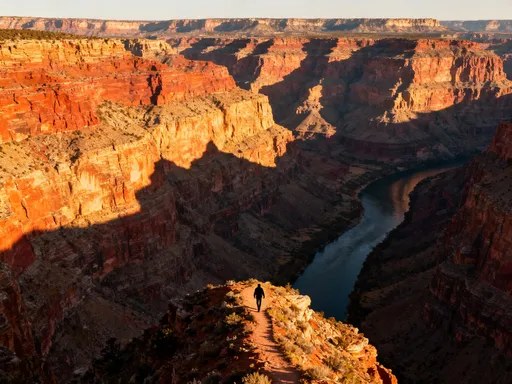
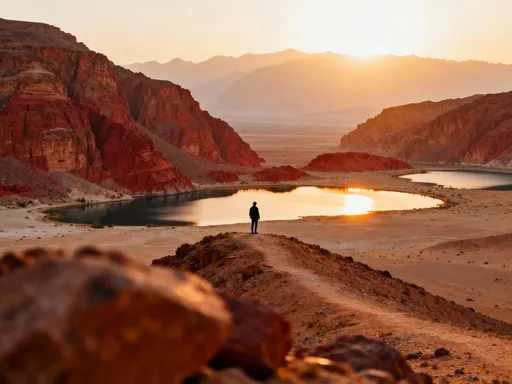
The visual impact changes dramatically depending on the time of day. At sunrise, golden light spills across the eastern walls, illuminating layers in warm hues of red, orange, and amber. Shadows recede slowly, revealing hidden alcoves and distant buttes. By midday, the sun casts sharp contrasts, emphasizing the depth and texture of the rock formations. As evening approaches, the canyon glows in deep crimson and purple tones, creating a serene and almost sacred atmosphere. These shifting patterns of light and shadow give the landscape a dynamic quality, ensuring that no two visits feel exactly the same.
This initial moment of awe is more than just a scenic experience—it’s a reminder of nature’s power and time’s quiet persistence. The Grand Canyon does not announce itself with noise or motion; it reveals itself gradually, inviting contemplation. For the 30- to 55-year-old traveler, often balancing family, career, and personal well-being, this pause in the presence of such magnitude can be deeply restorative. It offers a rare opportunity to step outside the rush of daily life and reconnect with something timeless and enduring.
Reading the Rock: A Billion-Year Story in Stone
Beneath the visual splendor lies a scientific treasure: the Grand Canyon’s exposed rock layers offer one of the most complete geological records on Earth. Spanning nearly two billion years, these strata are like pages in a book, each telling a chapter of our planet’s history. At the bottom of the canyon, the Vishnu Schist—formed over 1.7 billion years ago—represents some of the oldest rock visible on the continent’s surface. These dark, metamorphic rocks were once ancient ocean sediments compressed and heated deep within the Earth’s crust.
Ascending from the river upward, the layers become progressively younger. Above the Vishnu Schist lie the Grand Canyon Supergroup, tilted sedimentary rocks that hint at ancient mountain-building events and shifting tectonic plates. Higher still are the horizontal layers that dominate the canyon walls: the Redwall Limestone, Coconino Sandstone, and the Kaibab Limestone at the rim, which formed around 270 million years ago in shallow seas and desert dunes. Each layer preserves evidence of past environments—marine fossils in limestone, ripple marks in sandstone, and ancient soil beds—providing a vivid picture of Earth’s changing climates and landscapes.
This geological clarity is what makes the Grand Canyon unique among natural wonders. Unlike mountains obscured by vegetation or valleys filled with sediment, the canyon’s erosion has stripped away the surface, exposing a cross-section of time. Scientists and educators alike regard it as an open-air laboratory where the processes of erosion, uplift, and sedimentation can be studied firsthand. For the curious traveler, understanding these layers transforms a scenic overlook into a journey through deep time. It fosters a sense of connection—not just to this place, but to the very history of the planet we call home.
Beyond the Viewpoints: Where the Real Adventure Begins
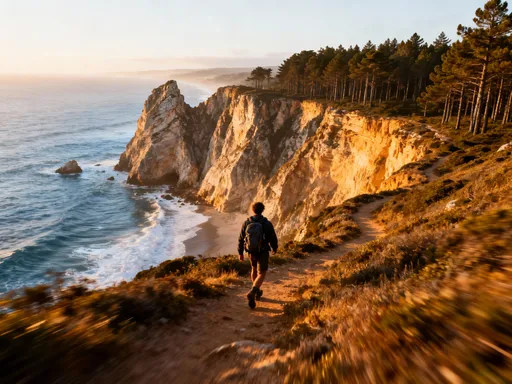
While the South Rim’s viewpoints offer breathtaking panoramas, the true essence of the Grand Canyon reveals itself only when one steps beyond the guardrails and begins to descend. Trails like the Hermit Trail and the less-traveled routes along the North Rim provide intimate encounters with the terrain, away from the crowds. These paths wind through narrow corridors, past crumbling cliffs and ancient rock shelters, offering a more personal dialogue with the landscape. The experience shifts from observation to immersion, from seeing to feeling.
Descending into the canyon is a sensory journey. With every thousand feet of elevation lost, the temperature rises noticeably—often by 20 degrees or more by the time hikers reach the river. The air grows drier, the scent of sun-baked rock fills the nose, and the sound of wind replaces distant chatter. The texture of the trail changes too, from packed gravel to loose shale, requiring careful footing. Each layer of rock underfoot tells its own story, and the silence deepens as the world above fades from view.
Such journeys demand preparation and respect. The National Park Service emphasizes that hiking into the canyon is far more challenging than hiking out. Many underestimate the physical toll of the return climb, especially in summer heat. Proper footwear, ample water, and a clear understanding of one’s limits are essential. Yet for those who approach with care, the rewards are profound. There is a quiet strength in moving through such ancient terrain, a sense of accomplishment that lingers long after the hike ends. For women in midlife, often caregivers and planners, this kind of intentional, self-directed adventure can be deeply empowering.
River’s Role: How Water Sculpted a Wonder
At the heart of the Grand Canyon’s formation is the Colorado River, a force of nature that has carved this monumental trench over the past five to six million years. Though it appears narrow from the rim, the river is the canyon’s architect, steadily cutting downward through rock layers as the Colorado Plateau slowly rose. This dual process—uplift and erosion—created the dramatic depth and steep walls that define the canyon today. The river’s work continues, shaping rapids, undercutting cliffs, and transporting millions of tons of sediment downstream each year.
Modern rafting trips offer a rare perspective from within the canyon’s depths. Multi-day expeditions navigate through some of the most remote and awe-inspiring sections, from the thunderous waves of Lava Falls to the calm stretches where the river reflects towering cliffs. These trips are not just adventures; they are floating classrooms. Guides share insights about geology, ecology, and river dynamics, helping participants understand how water, time, and gravity conspire to reshape the Earth. The experience is both exhilarating and humbling, reminding travelers that nature operates on a scale far beyond human control.
The river also sustains life in unexpected ways. Along its banks, cottonwood groves and willow thickets provide critical habitat for birds, insects, and mammals. Riparian zones stand in stark contrast to the surrounding desert, offering shade and moisture in an otherwise arid environment. Even the river’s seasonal fluctuations—once dictated by natural snowmelt, now influenced by upstream dams—play a role in shaping the ecosystem. Controlled floods, released periodically to mimic natural patterns, help rebuild sandbars and support native plant growth. This delicate balance underscores the importance of stewardship in preserving the canyon’s natural rhythms.
Above and Below: Contrasting Ecosystems Across Elevations
The Grand Canyon is not a single environment but a vertical mosaic of life zones stacked atop one another. From the sun-scorched desert floor to the forested rims, elevation changes create distinct microclimates that support a surprising diversity of plants and animals. At the bottom, near the river, temperatures can soar above 100°F in summer, fostering hardy desert species like creosote bush, cacti, and yucca. These plants have adapted to extreme heat and minimal water, their deep roots and waxy leaves conserving every drop of moisture.
As elevation increases, so does biodiversity. Mid-level slopes host pinyon pine and juniper woodlands, where mule deer forage and lizards dart between rocks. Higher still, on the North and South Rims, ponderosa pine and fir forests thrive in cooler, wetter conditions. These forests receive significantly more rainfall and are often blanketed in snow during winter months. The contrast between the canyon’s floor and rim is so stark that it feels like traveling across entire regions in a single day.
This ecological gradient also supports remarkable wildlife. The endangered California condor, with its nine-and-a-half-foot wingspan, soars on thermal currents above the canyon, scanning for carrion. Bighorn sheep navigate steep cliffs with astonishing agility, their hooves adapted to grip narrow ledges. Smaller creatures like the Kaibab squirrel, found only on the North Rim, illustrate how isolation can lead to unique evolutionary paths. For visitors, recognizing these adaptations deepens appreciation for the canyon’s complexity. It’s not just a geological wonder—it’s a living, breathing ecosystem shaped by elevation, climate, and resilience.
Human Footprint: Balancing Access and Preservation
As one of the most visited national parks in the United States, the Grand Canyon faces ongoing challenges in managing tourism while protecting its fragile terrain. Park infrastructure—including paved trails, shuttle systems, and designated viewpoints—helps direct foot traffic and minimize environmental impact. The shuttle system on the South Rim, for example, reduces congestion and emissions, allowing more people to experience the canyon without degrading the landscape. These thoughtful designs reflect a commitment to sustainable access, ensuring that future generations can enjoy the same wonders.
Visitors play a crucial role in preservation. Simple actions—staying on marked trails, packing out all trash, avoiding shortcuts, and respecting wildlife—help maintain the canyon’s integrity. The Leave No Trace principles are not just guidelines; they are a shared responsibility. Litter, soil erosion, and disturbance to plants or animals may seem minor in isolation, but multiplied by millions of annual visitors, their cumulative effect can be significant. Education and awareness are key, especially for families and first-time travelers who may not realize how easily natural spaces can be damaged.
The Grand Canyon is also a place of deep cultural significance. Several Indigenous nations, including the Havasupai, Hopi, and Navajo, have lived in and around the canyon for centuries. Their traditions and stewardship reflect a long-standing relationship with the land. While specific ceremonial practices are not shared publicly, acknowledging this enduring connection fosters respect and humility. Visitors are encouraged to learn about the region’s Native history through park exhibits and guided programs, enriching their experience with deeper understanding. Preservation, in this context, is not just about rocks and trails—it’s about honoring the full story of the land.
Planning Your Own Deep Dive: Practical Tips for an Authentic Experience
For those ready to explore the Grand Canyon beyond the postcard views, thoughtful planning makes all the difference. The best times to visit are spring (March to May) and fall (September to November), when temperatures are mild and crowds are smaller. Summer brings intense heat, especially at lower elevations, making hiking dangerous without careful preparation. Winter offers solitude and snow-dusted scenery, though some trails and roads may be icy or closed.
Footwear is critical. Sturdy hiking boots with good ankle support and traction are essential, particularly on loose or uneven terrain. Moisture-wicking clothing helps regulate body temperature, while a wide-brimmed hat and sunscreen protect against strong desert sun. Hydration is non-negotiable—one gallon of water per person per day is recommended, even for short hikes. Many underestimate how quickly dehydration can occur in dry, high-altitude environments.
Navigation tools such as topographic maps, compasses, or GPS devices are wise investments, especially for backcountry travelers. Cell service is limited or nonexistent in most areas, so relying on digital apps alone is risky. For those planning overnight hikes or rim-to-rim treks, permits are required and should be secured well in advance. Packing light but thoroughly—including first-aid supplies, snacks, and emergency blankets—ensures safety without burden.
Finally, consider slowing down. Instead of rushing through a single day, spend multiple nights in the park. Stay at lodges on the rim or camp under the stars to witness the canyon in different lights. Watch the sunrise from Mather Point, listen to the silence at dusk, and let the landscape speak at its own pace. For women managing busy households and schedules, this kind of deliberate travel is not indulgence—it’s renewal. It’s a chance to breathe deeply, think clearly, and reconnect with the natural world in a way that nourishes the spirit.
The Grand Canyon’s terrain is more than rock and space—it’s a story written in stone, waiting to be read. By choosing to explore it with curiosity and care, we don’t just witness nature’s power; we become part of its ongoing journey.