You Won’t Believe What I Found in Guanajuato’s Hidden Alleys
Wandering through Guanajuato feels like stepping into a living mural—colorful, chaotic, and full of soul. I didn’t expect to fall in love with a city so unapologetically artistic, where every tunnel, plaza, and cobblestone tells a story. From street musicians echoing in underground passages to vibrant galleries tucked in colonial homes, Guanajuato’s art and culture aren’t just displayed—they’re lived. This is discovery at its most authentic. It’s not the kind of place you visit to take photos and leave; it’s the kind of place that quietly reshapes your sense of beauty, history, and human expression. What you find here isn’t just art—it’s a way of being.
First Impressions: A City That Defies Expectations
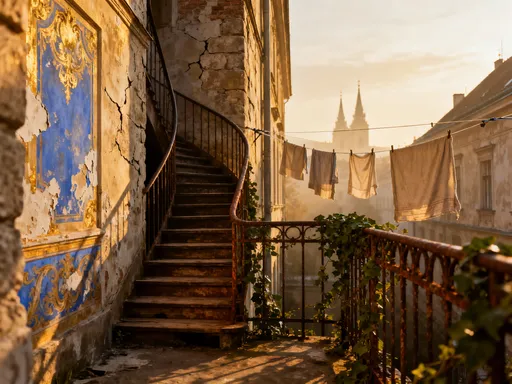
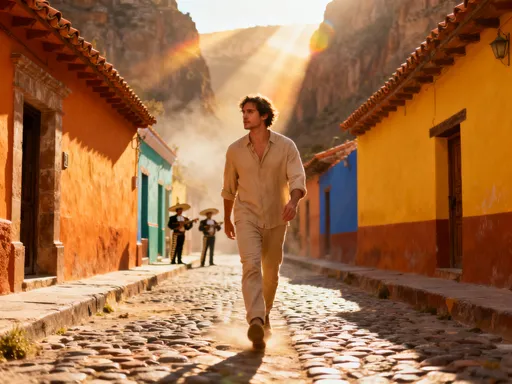
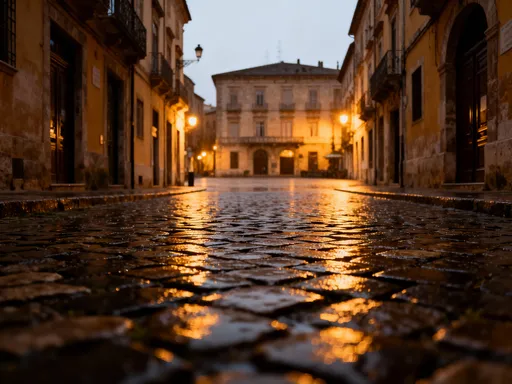
Arriving in Guanajuato, the first thing that strikes you is the way the city climbs the hills like a mosaic come to life. Houses painted in saffron yellow, terracotta red, and sky blue cling to steep slopes, connected by narrow cobblestone streets that twist and turn with no regard for logic. There are no grand boulevards or sweeping vistas—just intimate alleyways, sudden plazas, and staircases that seem to lead nowhere and everywhere at once. The city’s topography alone sets the tone: this is a place that resists order, embraces spontaneity, and rewards curiosity.
Guanajuato’s charm lies in its refusal to be polished. Unlike other colonial cities in Mexico that have been carefully restored for tourism, Guanajuato feels alive, even a little unruly. Children play soccer in the plazas, vendors sell fresh juice from wooden carts, and the scent of roasted corn drifts through the air. You don’t feel like a spectator here—you feel like a participant. The historic center, designated a UNESCO World Heritage site in 1988, is not a museum piece frozen in time. It’s a working city, where families have lived for generations and artists have found a home for centuries.
One of the most striking aspects of Guanajuato is how seamlessly the past and present coexist. A 17th-century church might stand beside a graffiti-covered wall, and a traditional bakery could share a street with a modern art studio. This blending isn’t accidental—it’s intentional, reflective of a cultural identity that values continuity without sacrificing innovation. As you walk, you begin to sense that Guanajuato doesn’t just preserve history; it builds upon it, layer by layer, like the sediment of time made visible.
Even the way you navigate the city feels like part of the experience. With limited space on the surface, Guanajuato developed an extensive network of underground tunnels originally built to control flooding from the Guanajuato River. Today, these tunnels serve as roads, allowing cars to pass beneath the city while pedestrians enjoy the quiet above. Walking through the upper streets, you’re free from traffic, free to linger, to listen, to look. It’s a rare urban design that prioritizes human experience over convenience—a subtle but powerful statement about what the city values.
The Art That Lives on Walls and Streets
If there’s one thing Guanajuato teaches you, it’s that art doesn’t need a frame to matter. Here, creativity spills out of galleries and onto the streets, where every wall is a potential canvas. Street art in Guanajuato isn’t vandalism or rebellion—it’s dialogue. Murals cover entire facades, telling stories of indigenous heritage, social justice, and local pride. These aren’t generic images churned out for Instagram; they’re deeply rooted in the community, often created by local artists or collectives who see their work as both expression and education.
In the famous Callejón del Beso, or Alley of the Kiss, colorful paintings frame the legend of two forbidden lovers who could only touch by leaning from their balconies. The tale has become a symbol of romance, and couples now kiss here for good luck. But beyond the tourist appeal, the alley’s walls are covered in vibrant frescoes that blend folklore with contemporary style. The art here doesn’t just decorate—it deepens the experience, turning a simple story into a visual pilgrimage.
Move just a few blocks away, and you’ll find less-visited alleys where the messages grow bolder. In neighborhoods like Barrio de la Cata and San Javier, murals address themes like migration, environmental protection, and indigenous rights. One powerful piece depicts a woman in traditional Purépecha dress standing before a fractured cityscape, her hands outstretched as if holding the pieces together. These works don’t shy away from complexity. Instead, they invite passersby to pause, reflect, and connect.
What makes Guanajuato’s street art so impactful is its integration into daily life. You don’t have to seek it out in designated zones or festivals—it’s everywhere, as natural as the architecture itself. A child walks to school beneath a mural of a soaring eagle; a grandmother sells fruit in front of a painted tribute to local farmers. Art isn’t separate from the city’s rhythm; it is part of the rhythm. This normalization of creativity sends a quiet but powerful message: that beauty and meaning belong in the everyday.
Galleries Hidden in Historic Homes
Beneath Guanajuato’s vibrant exterior lies another layer of artistic depth—one found behind heavy wooden doors and wrought-iron gates. Within restored colonial mansions, some dating back to the 1700s, contemporary art thrives in intimate, thoughtfully curated spaces. These galleries are not large institutions with sterile white walls; they are homes transformed, where the architecture itself becomes part of the exhibition.
The Museo de Arte de Guanajuato, housed in the former El Carmen monastery, is one of the city’s cultural anchors. Its collection features works by prominent Mexican modernists such as Dr. Atl and Saturnino Herrán, whose paintings blend European techniques with distinctly Mexican themes. Walking through its vaulted halls, you feel the weight of artistic legacy—but also a sense of continuity. Temporary exhibitions often spotlight emerging artists, ensuring that the museum remains a living, evolving space rather than a static archive.
Equally compelling are the smaller, independent galleries scattered throughout the city. Sala de Arte, located in a renovated 18th-century residence, hosts rotating exhibitions that range from abstract installations to socially engaged photography. What stands out is the curatorial courage—these spaces aren’t afraid to challenge or provoke. One recent exhibit featured textile art made from recycled materials, commenting on consumerism and environmental decay. Another explored gender roles in rural Mexico through a series of haunting portraits.
Perhaps the most remarkable aspect of Guanajuato’s gallery scene is how naturally it fits within the city’s fabric. You might stumble upon an opening reception while searching for a coffee shop, or hear the faint sound of a curator’s talk drifting from an open window. These moments feel serendipitous, yet they reflect a deeper truth: that art in Guanajuato is not confined to elite circles. It’s accessible, embedded in the community, and treated as a shared inheritance rather than a luxury.
Music in the Air: Sound as Cultural Expression
In Guanajuato, silence is rare. The city hums with music at all hours—sometimes loud, sometimes soft, but always present. It comes from open windows, street corners, and hidden courtyards. You might hear the crisp notes of a violin practice, the rhythmic clack of dance shoes on stone, or the joyful chaos of a mariachi band tuning up. Music here isn’t performance in the traditional sense; it’s atmosphere, an essential part of the city’s identity.
The most famous manifestation of this musical spirit is the Festival Internacional Cervantino, held every October. What began in 1972 as a small theater festival honoring Miguel de Cervantes has grown into one of Latin America’s most prestigious cultural events, attracting artists from over 40 countries. Yet even outside the festival season, the city remains a stage. The Conservatorio de Música, one of the oldest in the Americas, trains generations of musicians whose presence infuses Guanajuato with constant rehearsal, recital, and improvisation.
On any given afternoon, you can find students practicing in shaded plazas, their music blending with the chatter of locals and the chime of church bells. In Jardín de la Unión, the city’s main square, folk dancers in bright costumes perform traditional dances like the *danza de los concheros*, their movements precise and ceremonial. These aren’t shows put on for tourists—they’re expressions of cultural continuity, passed down through families and community groups.
Buskers add another layer to the soundscape. In Plaza San Fernando, a guitarist might sing corridos about revolution and love; near the Teatro Juárez, a trio plays classical pieces on string instruments. The variety is staggering, but so is the cohesion—each sound feels like a thread in a larger tapestry. Even the city’s acoustics contribute to the experience. The narrow alleys and stone buildings create natural echo chambers, making every note linger a little longer, resonate a little deeper.
The Underground: Tunnels That Shape the City’s Soul
Beneath Guanajuato’s picturesque surface lies a network of tunnels that once served a practical purpose: flood control. In the 18th century, the Guanajuato River frequently overflowed, threatening the silver-mining city above. Engineers rerouted the river underground and built a series of tunnels to manage the water flow. Over time, these tunnels were paved and repurposed as roads, creating a unique dual-level city where cars drive below and people walk above.
Today, these tunnels are more than infrastructure—they’re part of Guanajuato’s identity. Some stretches have been transformed into cultural spaces, hosting light installations, sound art, and temporary exhibits. Walking through them feels like moving through the city’s subconscious, where history, engineering, and imagination converge. Dimly lit and slightly damp, the tunnels evoke the mining era that built Guanajuato’s wealth, while the modern art within speaks to its current renaissance.
One particularly moving installation, *Voces del Subsuelo* (Voices of the Subsoil), features recorded interviews with longtime residents played at intervals along a tunnel path. As you walk, you hear stories of childhood, loss, and resilience—voices that might otherwise go unheard. The effect is haunting and intimate, a reminder that cities are not just made of stone and steel, but of memory and voice.
The tunnels also serve as a metaphor for Guanajuato itself—a city that reveals its depth only to those willing to look beyond the surface. Just as the underground passages support the city above, so too do its cultural foundations sustain its present vibrancy. To walk through these tunnels is to understand that Guanajuato’s beauty is not just visual; it’s structural, rooted in layers of time, labor, and creativity.
Local Craftsmanship: From Pottery to Paper Art
In the bustling Mercado Hidalgo, the air is thick with the scent of spices, fresh bread, and hand-carved wood. Stalls overflow with locally made crafts—colorful textiles, intricately painted ceramics, and, most notably, *papel picado*, the delicate paper banners cut into elaborate patterns. These aren’t mass-produced souvenirs; they are handmade, often by artisans who have practiced their craft for decades. Each piece carries the imprint of skill, tradition, and personal care.
Papel picado, in particular, holds deep cultural significance. Traditionally used in celebrations like Día de los Muertos and weddings, these banners symbolize the fragility of life and the beauty of impermanence. In Guanajuato, the designs often incorporate local motifs—flowers, birds, religious icons, and even scenes from daily life. Watching an artisan at work is mesmerizing: with a stack of tissue paper and a single chisel, they create intricate patterns that unfold like lace when held to the light.
The region’s craftsmanship extends beyond paper. Nearby towns like San Miguel de Allende and Dolores Hidalgo contribute to a thriving artisan economy, but Guanajuato adds its own distinctive touch. Ceramics here are bolder in color and form, often featuring whimsical shapes and expressive faces. Jewelry makers incorporate local stones like onyx and opal into their designs, creating pieces that feel both modern and ancient.
What makes these crafts so meaningful is their connection to community. Many workshops are family-run, with skills passed from parent to child. Visitors can take classes to learn the basics of paper cutting or pottery, not as a tourist gimmick, but as a genuine invitation to participate. These experiences offer more than a souvenir—they offer a moment of connection, a chance to understand the hands and hearts behind the art.
Why Guanajuato Changes How You See Art
Guanajuato doesn’t just show you art—it changes your relationship to it. Here, art is not something you observe from a distance or consume in silence. It’s something you walk through, hear in the air, touch in the markets, and feel in the rhythm of daily life. It’s not separate from the city; it is the city. This integration challenges the conventional boundaries between artist and audience, between creation and living.
What makes Guanajuato so transformative is its insistence that culture is not static. It evolves, responds, and breathes. A mural may fade, a festival may end, but the spirit behind them endures. The city teaches you to see creativity not as a product, but as a practice—one that belongs to everyone, not just professionals. In this way, Guanajuato becomes more than a destination; it becomes a model for how communities can nurture expression, memory, and identity.
For the traveler, especially one seeking meaning beyond the surface, Guanajuato offers a rare gift: the chance to rediscover art as a lived experience. It invites you to slow down, to notice the details, to listen to the stories embedded in walls, music, and handmade objects. It reminds you that beauty is not always polished or perfect—it can be raw, imperfect, and all the more powerful for it.
Leaving Guanajuato, you carry more than photographs or souvenirs. You carry a shift in perspective—a deeper appreciation for how culture can be woven into the fabric of everyday life. You begin to notice the art in your own surroundings: the way light falls on a building, the rhythm of a street vendor’s call, the colors of a handmade quilt. Guanajuato doesn’t just change how you see art. It changes how you see the world.