You Won’t Believe What I Saw in Dahab—This Place Is Unreal
Dahab, Egypt isn’t just another Red Sea stop—it’s a quiet rebel hiding in plain sight. I went looking for peace and found something way bigger: moments so still, so vivid, they felt stolen from a dream. From glassy lagoons to desert trails with zero footprints, the viewing experiences here don’t shout—they whisper, then punch you in the soul. If you're tired of crowds and crave views that feel personal, raw, and wildly alive, let me show you the Dahab only locals and drifters truly know.
The First Glimpse: Arrival in a Town That Feels Like a Secret
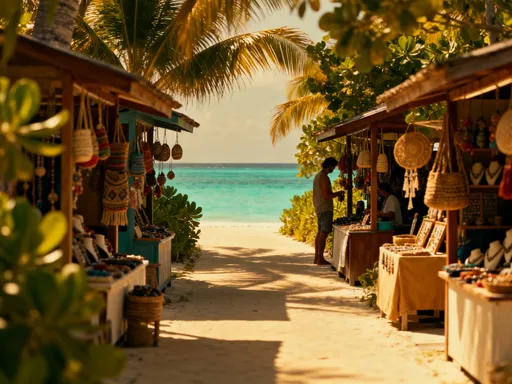
There’s no grand entrance to Dahab—no sweeping airport shuttles or polished signage marking your arrival. You simply cross from the bus or taxi onto a dusty stretch of coastal road, and suddenly, you’re there. The air smells of salt and dried thyme, and the buildings, painted in faded pinks, soft yellows, and sun-bleached blues, seem to lean into the wind like old friends sharing a secret. Unlike its more commercialized neighbor, Sharm El-Sheikh, Dahab refuses to perform. There are no towering hotel complexes or neon-lit promenades. Instead, donkeys clip-clop along sand-packed lanes, carrying groceries or children, while fishermen mend nets on the shore in silence broken only by the lap of waves.
What strikes most is the light. In the late afternoon, the Sinai mountains to the west catch the sun like molten copper, casting long shadows across the valley. The contrast between the deep blue of the sea and the warm ochre of the desert creates a natural palette so harmonious it feels curated by time itself. This first visual is not just scenery—it’s a signal. Dahab does not cater to the hurried gaze. It invites you to slow down, to notice, to linger. Every detail, from the hand-painted shop signs to the stray cats napping in doorways, speaks of a rhythm untouched by mass tourism. This is the quiet rebellion of Dahab: it remains exactly as it chooses to be, unbothered by trends or timelines.
For travelers seeking authenticity, this unassuming arrival is a gift. It sets the tone for an experience rooted in presence rather than performance. You don’t come to Dahab to check off attractions; you come to inhabit a place where life unfolds naturally, where beauty isn’t staged but discovered in the ordinary. Whether you're sipping mint tea at a roadside stall or watching fishermen haul in their morning catch, the message is clear: you’ve entered a different kind of destination—one that values stillness over spectacle, and depth over distraction.
Blue Hole Beyond the Dive: A View That Haunts You
The Blue Hole is often spoken of in hushed tones, not just for its legendary depth—over 130 meters—but for the quiet solemnity that surrounds it. While divers from around the world come to test their limits in its waters, there is a profound viewing experience available to those who never enter the sea. Standing at the edge of the natural sinkhole, you look down into a circle of impossible blue, so dark it seems to absorb light rather than reflect it. The water’s surface is still, broken only by the occasional ripple from a passing breeze, and around it, the desert floor stretches out in silence, as if holding its breath.
The color gradient is surreal: from turquoise shallows near the shore to an abyssal navy at the center, the transition feels almost artificial, like a painting too vivid to be real. Yet this is nature in its most mysterious form. The spiritual weight of the place is palpable, not because of any religious significance, but because of the stories embedded in its depths—tales of exploration, loss, and human courage. Even if you don’t dive, standing at the rim, you feel the pull of that silence, the sense of something vast and unknowable just beneath the surface.
For non-divers, visiting the Blue Hole is about reverence as much as sightseeing. There are no grand viewing platforms or ticketed entrances—just a simple path leading to the edge. It’s essential to respect the site’s history and the lives lost in its depths. Staying on marked paths, avoiding loud noises, and refraining from throwing objects into the water are small but meaningful acts of respect. Local guides often share stories of past expeditions, not to glorify risk, but to honor the discipline and preparation required to engage with such a powerful natural feature.
Safety is also a quiet consideration. The rocks around the hole can be slippery, and the sun is relentless. Visitors should wear sturdy shoes, carry water, and avoid visiting during peak heat. But more than logistics, the Blue Hole teaches a deeper lesson: that some of the most powerful views are not meant to be conquered, but contemplated. It is a place where looking becomes a form of listening—to the wind, to the water, to the echoes of those who came before.
Mount Sinai Side Trip: A Different Kind of Clarity
While many travelers make the pilgrimage to Mount Sinai via the well-trodden path to St. Catherine’s Monastery and the main summit, there is another way to experience the mountain—one that offers solitude and sweeping vistas without the crowds. Lesser-known desert trails wind through the surrounding wadis, leading to secondary peaks that provide panoramic views of the entire southern Sinai range. These routes are not marked on every tourist map, but they are known to local Bedouin families who have navigated these lands for generations.
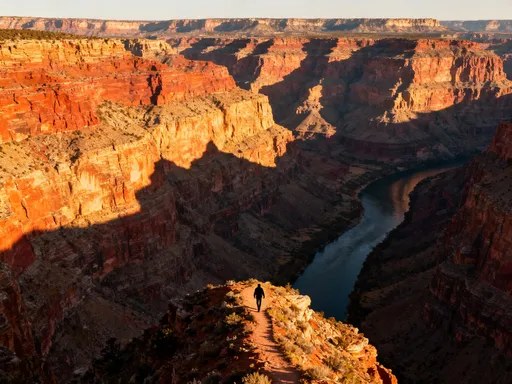
One of the most rewarding experiences is reaching a high vantage point just before dawn. As the sky shifts from indigo to soft gold, the shadows retreat like ink dissolving in water. The valley below, once cloaked in darkness, begins to reveal its layers—rock formations etched by wind, dry riverbeds snaking through the sand, and the occasional flash of a desert fox moving through the brush. From this height, the world feels both vast and intimate, a paradox that only the desert can offer.
Reaching these trails requires thoughtful planning. Shared minibuses or private drivers can take you to trailheads outside the main tourist zones. Hiring a local guide is not only respectful but practical—these guides understand weather patterns, water sources, and safe passage through the terrain. They do not lead tours in the conventional sense; rather, they walk beside you, sharing knowledge quietly, pointing out plants used for healing, or the tracks of animals that pass unseen.
Sustainable viewing practices are essential here. This is not a landscape that forgives carelessness. Travelers are encouraged to carry out all waste, avoid picking plants, and stay on natural paths to prevent erosion. The beauty of Mount Sinai’s lesser trails lies in their untouched quality—no railings, no signs, no crowds. What you gain is not just a view, but a sense of connection to a land that has changed little over centuries. It is a reminder that some of the most transformative travel moments happen not at destinations, but in the quiet act of moving through a place with awareness and humility.
Eel Garden at Golden Hour: Where Nature Performs
If Dahab has a living theater, it is the Eel Garden—a shallow reef system where dozens of garden eels rise from the sandy floor like delicate reeds swaying in an underwater breeze. The best time to visit is late afternoon, when the sun sinks low and the light spills across the water in golden ribbons. As you walk along the designated path just above the reef, the eels emerge, their slender bodies pulsing gently with the current. When you step closer, they retreat into their burrows—a fleeting dance of curiosity and caution.
The magic of this experience lies in its accessibility. You do not need to swim or snorkel to witness it. The shallow depth and clear water allow for full visibility from the walkway, making it ideal for families, older travelers, or anyone who prefers to stay dry. The way light refracts through the surface creates a shimmering effect, turning the entire scene into a living mosaic. Small fish dart between coral heads, crabs scuttle sideways over rocks, and the eels, ever present, create a rhythm all their own.
Timing is key. Low tide during golden hour—roughly one hour before sunset—offers the clearest views and calmest waters. High tide can obscure the seabed, while midday sun creates glare that diminishes visibility. Local signs often indicate ideal visiting times, but asking at nearby cafes or dive centers can provide real-time updates. The area is protected, and strict guidelines are in place to preserve the ecosystem.
Eco-friendly viewing etiquette is non-negotiable. Stepping off the walkway, feeding the eels, or touching the reef is prohibited. Even dropping a plastic bottle or leaving footprints in sensitive zones can disrupt the delicate balance. Travelers are encouraged to bring reusable water bottles, wear reef-safe sunscreen, and observe quietly. The Eel Garden is not a spectacle to be consumed, but a natural process to be honored. When you stand still and let the scene unfold, you realize that the most profound moments in nature are not loud—they are subtle, repeated, and deeply calming.
Desert Wadis: Hidden Pools and Silent Landscapes
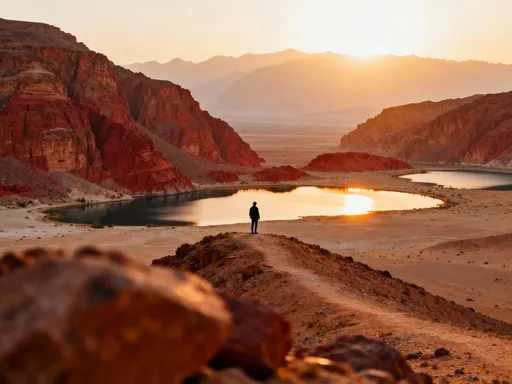
Just beyond Dahab’s coastal edge, the desert reveals another dimension—one of unexpected greenery, cool shade, and still pools nestled between towering red cliffs. Wadis like Wadi Zatar and Wadi Zaghara are not the dramatic canyons of far-flung adventures, but intimate landscapes that reward quiet exploration. These dry riverbeds, carved by rare but powerful rains, now serve as corridors of life, where acacia trees find purchase in cracks and small springs feed hidden oases.
The visual contrast is striking. The deep rust of the rock against the pale green of desert plants creates a palette that feels both ancient and alive. In some wadis, you’ll find shallow pools fed by natural seepage—perfect for cooling your feet after a short hike. The silence is profound, broken only by the rustle of leaves or the distant call of a bird. Unlike more famous desert hikes, these wadis do not require technical skill or endurance. Most are accessible within a 20- to 40-minute walk from the road, making them ideal for travelers who want beauty without extreme exertion.
Exploring these spaces safely means preparation. Sturdy walking shoes with good grip are essential, as some paths are loose with gravel. A wide-brimmed hat, sunscreen, and at least two liters of water per person are non-negotiable, even for short visits. While there are no marked trails in some areas, following existing footpaths helps prevent damage to fragile vegetation. Local guides often lead small groups through these wadis, not to navigate, but to share stories—how certain plants are used for tea, where ibex might be spotted at dawn, or why some rocks bear ancient carvings.
What makes these wadis so powerful is their sense of discovery. You don’t come here for a checklist; you come to feel the shift in temperature as you enter a shaded gorge, to hear the echo of your footsteps against stone, to sit by a pool and watch the light change. These are cinematic landscapes, not because they resemble movies, but because they unfold like scenes in a film—each turn revealing a new composition of color, texture, and stillness. In a world of constant movement, the desert wadis offer a rare gift: the chance to be fully present in a place that asks for nothing in return.
Sunset from the Bedouin Coast: Simplicity as a Spectacle
In the northern reaches of Dahab, away from even the modest buzz of the town center, the coastline softens into a stretch of sand and low cliffs known informally as the Bedouin Coast. Here, there are no restaurants with stage shows, no DJ sets, no plastic loungers. Instead, small groups gather as the sun begins its descent, sitting on rugs or low stools, sipping hot tea from glass cups, and watching the sky ignite. Smoke from hookahs curls into the air, not aggressively, but gently, blending with the salt breeze.
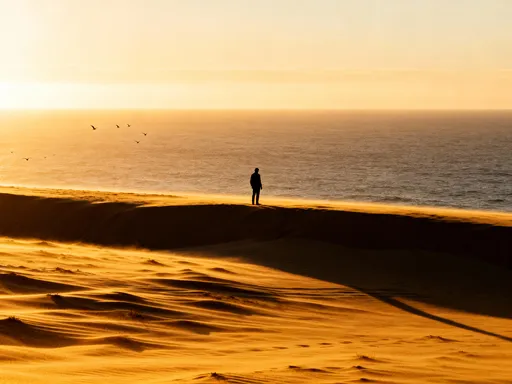
The sunset here is not an event—it is a ritual. There is no announcement, no countdown. It simply happens, and everyone present falls into a kind of collective quiet. The sea turns from blue to liquid gold, then deepens into violet as the horizon swallows the sun. Stars appear one by one, not drowned out by city lights, but clear and sharp. This absence of commercialism amplifies the visual impact. Without distractions, your attention narrows to the essential: color, light, silence.
Visitors are welcome to observe or join, but the etiquette is clear: come with respect, not demand. Sitting quietly, accepting a cup of tea if offered, and avoiding loud conversation are small gestures that go far. Some local families run informal tea stations, offering mint tea or sage infusion for a small donation. These are not businesses in the Western sense, but acts of hospitality rooted in tradition.
The experience reminds us that beauty does not require production. No lighting designers, no sound systems, no tickets. Just the natural arc of the day, witnessed together. In a world saturated with curated experiences, this unscripted moment feels radical. It is not about capturing the perfect photo, but about letting the moment capture you. As the first star appears, and someone softly says, 'Mabrouk,' meaning 'blessed,' you understand that some of the most powerful travel memories are not made—they are received.
Why These Views Change You: The Power of Unfiltered Beauty
The views in Dahab do more than please the eye—they recalibrate the mind. In a time when so much of what we see is filtered, edited, or optimized for attention, Dahab offers unfiltered beauty. Its landscapes do not compete for your gaze; they wait for you to notice them. And in that stillness, something shifts. You begin to see not just with your eyes, but with awareness. The way light moves across a rock face, the pattern of ripples in a tide pool, the silent exchange between a heron and the shallows—these are not distractions, but invitations to presence.
Sustained exposure to such untouched scenery has a measurable effect on mental clarity. Studies in environmental psychology suggest that natural, non-urban environments reduce mental fatigue and improve focus. But in Dahab, the effect feels deeper than cognitive function. It is emotional, almost spiritual. There is a sense of returning to a simpler way of being, where your value is not tied to productivity, but to perception. You are not there to achieve, but to witness.
True travel transformation does not come from ticking off landmarks or collecting photos. It comes from moments of pure, undisturbed seeing—when you stand at the edge of the Blue Hole and feel the weight of silence, or when you watch the sunset on the Bedouin Coast and forget to check your phone. These are the moments that linger, that reshape how you move through the world afterward. They remind you that beauty does not need to be loud to be powerful, and that some of the most profound experiences are the quietest.
Mindful travel is not a trend—it is a return to the essence of why we journey at all. Dahab, in its quiet rebellion, offers a model: slow down, look closely, and let the world speak. You don’t need to climb the highest peak or dive the deepest hole. You just need to be still enough to see what’s already there. And when you do, you may find, as so many have, that the most unreal places are the ones that make you feel most real.