You Won’t Believe These Hidden Leisure Spots I Found in London
London isn’t just about Big Ben and red buses—there’s a quieter, more personal side waiting to be discovered. I’ve wandered beyond the postcard sights and found cozy retreats where locals unwind. From tucked-away garden pubs to private bookshop nooks, these spots offer calm, charm, and a real taste of city life. If you're looking to escape the crowds and enjoy London like a true insider, this is where to start. These hidden gems aren’t listed on every tourist app, nor do they draw long queues. Instead, they thrive in the hush between footsteps, in the corners overlooked by guidebooks. They invite a slower pace, a deeper breath, and a more intimate experience of one of the world’s busiest capitals. For women who seek connection over chaos, serenity over spectacle, these spaces offer not just rest—but reawakening.
Introduction to London’s Private Leisure Scene
Amid the energy of London’s streets, a quieter rhythm pulses—one that belongs not to the tourist trail, but to those who live here. This rhythm is found in private leisure spaces: small, unassuming places where Londoners go to pause, reflect, and reconnect. These are not grand attractions, but intimate sanctuaries—places where time slows, conversation flows easily, and the city feels personal. As more travelers seek authenticity, the desire to experience London beyond the icons has grown. The appeal lies not in seeing more, but in feeling more—feeling the texture of daily life, the warmth of local hospitality, and the quiet joy of being present.
Private leisure in London is less about exclusivity and more about intention. It’s about choosing a bench beneath a plane tree over a crowded observation deck, or sipping tea in a backstreet café instead of queuing for a branded tour. These experiences are often stumbled upon, not planned. They emerge from wandering without urgency, from noticing the unmarked door with ivy creeping around the frame, or the narrow alley that opens into a sunlit courtyard. What makes them special is not their size or fame, but their atmosphere—a sense of being slightly off the map, where the city reveals its softer side.
For women in their 30s to 50s, many of whom balance family, work, and personal well-being, these spaces offer more than escape—they offer restoration. They provide room to breathe, to read, to journal, or simply to sit and watch the world pass by without demands. In a city that never sleeps, finding stillness becomes its own luxury. And London, for all its grandeur, is surprisingly generous with these quiet moments—if you know where to look.
The Allure of Hidden Garden Pubs
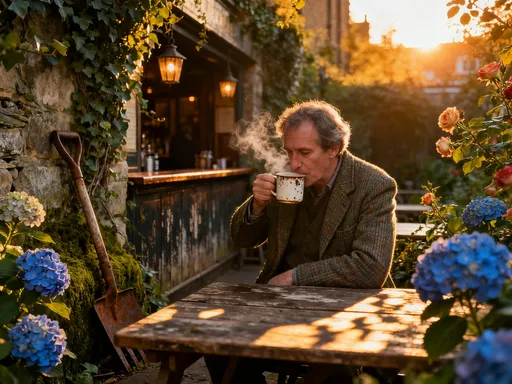
One of London’s best-kept secrets is its hidden pub gardens—green oases tucked behind centuries-old buildings, often invisible from the street. These are not manicured parks, but lived-in spaces where ivy climbs brick walls, wooden benches weather under rain and sun, and the air carries the scent of herbs and ale. They offer a rare blend of conviviality and calm, where you can enjoy a glass of cider beneath a wisteria-covered pergola while the city hums faintly in the distance. Unlike rooftop bars or chain pubs, these gardens feel personal, almost familial—places where regulars nod to each other and newcomers are welcomed with quiet warmth.
In Hampstead, one such garden lies behind a low-slung pub on Flask Walk. Reached by a narrow stone path, it unfolds into a terraced green space dotted with apple trees and climbing roses. In spring, the blossoms drift down like snow; in summer, the shade offers relief from the sun. There’s no music, no flashing signs—just the murmur of conversation and the clink of glasses. Another gem can be found in Clerkenwell, where a centuries-old coaching inn opens into a walled garden, its center marked by a fig tree that has stood for over fifty years. These spaces are not designed for Instagram, but for lingering.
What makes these garden pubs ideal for relaxed afternoons is their unpretentious charm. You won’t find dress codes or inflated prices. A pint costs little more than elsewhere, and a simple plate of cheese and bread feels like a feast when eaten under a canopy of leaves. For women traveling alone or with friends, these gardens offer safety and ease—a place to unwind without feeling watched or rushed. They are especially lovely in the late afternoon, when the golden light slants across the grass and the pace of life softens. To visit one is to step into a different version of London—one where joy is found not in spectacle, but in stillness.
Quiet Corners in Independent Bookshops
London’s independent bookshops are more than places to buy books—they are sanctuaries of thought and retreat. Tucked into side streets and converted storefronts, these shops offer hushed corners where time seems to pause. Wooden shelves rise to the ceiling, crammed with well-loved titles, while armchairs in sunlit alcoves invite visitors to sit and read. These are not retail spaces designed for quick transactions, but living rooms for the mind—places where curiosity is honored and solitude is respected. For women who cherish quiet reflection, few experiences are more satisfying than losing oneself in a bookshop nook with a cup of tea and a window view.
One such haven is a small bookshop in Bloomsbury, near the British Museum. Step inside, and the noise of the city fades. The air carries the scent of old paper and beeswax. A narrow staircase leads to a reading loft, where two cushioned window seats overlook a quiet square. Here, you can spend an hour with a novel or poetry collection, undisturbed. Another beloved shop in Notting Hill features a back room with a fireplace, a piano, and shelves of secondhand travel literature. On rainy afternoons, it’s common to see women reading, writing in journals, or sketching in notebooks—engaged in the quiet work of replenishing the spirit.
What makes these bookshops special is their resistance to speed. They do not push purchases or promote bestsellers with flashing signs. Instead, they cultivate atmosphere—soft lighting, thoughtful curation, and staff who remember your name and reading preferences. Many host small events: poetry readings, author talks, or book clubs for women over 40. These gatherings are low-key but meaningful, fostering connection without pressure. In a world of constant input, these spaces remind us that leisure can be intellectual, emotional, and deeply restorative. To visit one is to reclaim the simple pleasure of being alone with your thoughts.
Private Members’ Clubs with Guest Access
London’s private members’ clubs have long been associated with exclusivity, but a growing number now welcome guests or offer day passes, allowing visitors to experience their refined atmosphere without long-term commitment. These are not stuffy institutions of the past, but thoughtfully designed spaces that blend elegance with ease. With high ceilings, leather armchairs, curated art, and libraries filled with classic literature, they offer a sense of calm rarely found in public venues. For women seeking a refined yet relaxed environment, these clubs provide a unique form of urban retreat—somewhere to read, write, or simply be still in beautiful surroundings.
One such club in Mayfair opens its drawing room to visitors on weekday afternoons. The room features floor-to-ceiling windows, a grand piano, and a tea service that arrives on silver trays. Though members frequent the space, guests are treated with equal courtesy, and no one feels out of place. Another club near Covent Garden offers a garden terrace accessible to non-members during daylight hours. Surrounded by climbing jasmine and potted lemon trees, it’s a place where conversation flows gently and phones are rarely seen. These spaces are not about status, but about creating environments where attention can settle and the mind can rest.
What distinguishes these clubs is their emphasis on ambiance over activity. There are no screens, no loud music, no crowded bars. Instead, there is space—room to breathe, to think, to exist without performance. The etiquette is simple: speak softly, respect the space, and let time unfold naturally. For women who value grace and quiet dignity, these clubs offer a rare experience—a reminder that leisure can be both elevated and effortless. They are not escapes from life, but enrichments of it—places where one can feel both seen and unobserved at once.
Riverside Retreats Away from the Crowds
The River Thames is one of London’s most iconic features, yet most visitors concentrate on its central stretches—Westminster, the South Bank, Tower Bridge. Beyond these landmarks, however, the river reveals a gentler character. In neighborhoods like Richmond, Kew, and the Greenwich Peninsula, the Thames becomes a place of quiet beauty—where swans glide past willow trees, rowers glide silently at dawn, and benches sit empty beneath the sky. These lesser-known stretches offer some of the city’s most peaceful moments, perfect for reflection, reading, or simply watching the water flow by.
In Richmond, a riverside path winds through Old Deer Park, where herons stand in the shallows and kingfishers flash blue between the reeds. Wooden benches line the bank, each positioned for a different view—some facing the islands in the river, others turned toward the distant hills. Arrive early in the morning, and you may have the path to yourself, with only the sound of water and birdsong. Later in the day, local women walk their dogs, push strollers, or sit with coffee from nearby cafés. The atmosphere is unhurried, communal yet private—a shared understanding that this is a place to slow down.
On the Greenwich Peninsula, a modern promenade offers panoramic views without the crowds. At sunset, the sky turns rose-gold, reflecting off the glass façades of nearby buildings. Benches here are spaced far apart, allowing for solitude even on busy evenings. For women who enjoy quiet contemplation, this stretch of the river provides a powerful sense of release—the feeling of being both in the city and apart from it. Practical tips for visiting include arriving on weekday mornings, bringing a light blanket for cooler days, and carrying a book or journal. These riverside retreats do not require planning or expense—only the willingness to step off the beaten path and let the river guide you.
Wellness Spaces with a Local Vibe
Amid London’s wellness industry, which often leans toward luxury branding and high prices, a quieter movement has taken root—small-scale wellness spaces that prioritize serenity over spectacle. These are not sprawling spas with saunas and treatment menus, but modest studios, meditation rooms, and community centers offering simple, accessible experiences. In neighborhoods like Islington, Battersea, and Hackney, women gather for gentle yoga, breathwork sessions, and silent meditation—all in unassuming settings that feel more like living rooms than commercial venues. The focus is not on transformation, but on presence—on creating moments of stillness in an otherwise busy life.
One such studio in Islington hosts early evening yoga classes in a converted church hall. The room has wooden floors, soft lighting, and large windows that look onto a garden. The instructor speaks in a calm voice, guiding participants through slow movements and deep breathing. There is no pressure to perform, no mirrors to check your form—just the shared experience of moving with intention. Another space in Battersea offers thermal lounges where guests can rest on heated recliners, wrapped in blankets, while listening to ambient music. These venues are open to all, with donation-based pricing or low-cost day passes, making them accessible to women from all walks of life.
What makes these wellness spaces meaningful is their authenticity. They do not sell products or push memberships. There are no influencers taking selfies, no curated aesthetics. Instead, there is a sense of mutual care—a shared understanding that everyone is there to rest. For women who may feel overlooked in fast-paced environments, these spaces offer dignity and peace. They are not about fixing anything, but about honoring what already exists—the body, the breath, the moment. In a city that demands so much, these quiet corners offer something essential: the permission to simply be.
How to Find Your Own Hidden Spot
The most rewarding leisure experiences in London are often unplanned. They arise not from itineraries, but from curiosity—walking without a map, turning down an unfamiliar street, noticing a door slightly ajar. To find your own hidden spot, begin by slowing down. Put the phone away. Walk without a destination. Let your attention drift to details: the sound of a piano from an open window, the scent of baking bread, the sight of a cat sunning itself on a stone wall. These small cues often lead to larger discoveries—a courtyard café, a flower market, a bench with the perfect view.
Talking to locals can also open doors—literally. Baristas, booksellers, and shopkeepers often know the quiet places that never make it online. A simple question—“Where do you go to relax?”—can yield surprising answers. So can exploring neighborhoods slightly off the tourist trail: Canonbury, Frognal, Dulwich Village. These areas are well-connected by public transport but retain a village-like feel, with tree-lined streets and independent businesses. Walking through them, you begin to sense the rhythm of daily life—the school run, the lunchtime stroll, the evening drink at a neighborhood pub.
The key is to embrace spontaneity. Instead of packing every hour with sights, leave room for pauses. Sit on a bench for twenty minutes. Reread a paragraph in a book. Let your thoughts wander. Some of the best moments come not from doing, but from being. And in London, being often means discovering a place that feels like it was waiting just for you—a garden, a room, a view that offers not just beauty, but belonging. These are the moments that linger long after the trip ends.
Conclusion: Rediscovering London Through Quiet Joy
London is often celebrated for its monuments, museums, and grand streets. But its true magic lies elsewhere—in the quiet corners, the hidden gardens, the bookshop nooks, the riverside benches. These are the places where the city reveals its soul, not through noise, but through stillness. For women who seek depth over distraction, connection over crowds, these spaces offer a different kind of travel—one rooted in presence, curiosity, and gentle discovery. They remind us that joy does not always shout; sometimes, it whispers.
To explore London this way is to move like a local—to value moments over checklists, atmosphere over attractions. It is to understand that leisure is not a luxury, but a necessity—a way to restore balance, clarity, and peace. In these hidden spots, you are not a visitor passing through, but a participant in the quiet life of the city. You are seen not as a tourist, but as someone who takes the time to look, to listen, to be.
So wander with curiosity. Step through the unmarked door. Sit in the sunlit corner. Let London surprise you. Because the best experiences are not found in guidebooks—they are felt in the heart, remembered in the breath, and carried home as quiet joy.