Where Art Lives in Stone: Chennai’s Architectural Soul
Chennai isn’t just a city—it’s a canvas. From towering gopurams bursting with color to colonial facades whispering stories of time, its architecture is pure art in motion. I never expected to be so moved by carved pillars or sunlit courtyards, but here, every building feels alive. This is more than design; it’s devotion, history, and creativity fused into form. Let me take you through the heart of Chennai’s architectural wonders—where every detail tells a story.
The Living Canvas: Chennai as an Open-Air Art Museum
Walking through Chennai is like stepping into a living gallery where art does not hang on walls but rises from the earth in stone, stucco, and timber. The city’s skyline is not defined solely by height or modernity, but by a layered narrative written in architecture. Each neighborhood reveals a different chapter—from the sacred geometry of temple spires to the rhythmic arches of colonial verandahs, and the quiet elegance of traditional Tamil homes. This is a city where artistry is not reserved for museums; it is embedded in the very structure of daily life. Buildings are not merely shelters but statements of identity, belief, and cultural continuity.
What sets Chennai apart is how seamlessly it blends the ancient with the contemporary. A 1,000-year-old temple stands just blocks away from a modern cultural center that echoes its form. The streets of Mylapore hum with the scent of jasmine and the chisel of stone carvers still at work, preserving techniques passed down through generations. In neighborhoods like Triplicane and T. Nagar, residential facades are adorned with intricate plasterwork, colorful tiles, and ornamental iron grilles—each a small masterpiece in its own right. These details are not afterthoughts; they are integral to how the city sees itself.
The sensory richness of Chennai’s built environment is undeniable. Sunlight dances across carved lotus motifs on temple walls in the morning and casts long shadows from colonial columns in the late afternoon. The sound of temple bells blends with the rustle of palm leaves against weathered brick. Even the air carries meaning—incense from prayer halls, salt from the nearby Bay of Bengal, and the faint tang of aged wood from century-old homes. To walk through Chennai is to experience architecture not just visually, but emotionally and spiritually.
This city treats architecture as a craft, not a commodity. Builders here do not simply erect structures; they compose them. The difference lies in intention. A crafted building is made with care, with attention to proportion, material, and meaning. In Chennai, this tradition persists, even amid urban growth. New developments often incorporate traditional elements—courtyards for ventilation, terracotta tiles for cooling, and jali screens for privacy and airflow. These are not nostalgic gestures, but intelligent adaptations that honor both heritage and practicality.
Dravidian Masterpieces: The Soul of South Indian Temple Architecture
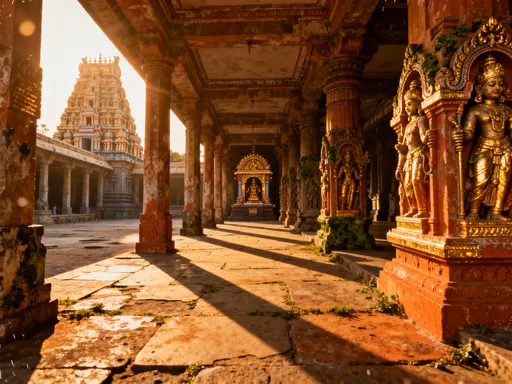
No discussion of Chennai’s architectural soul is complete without the temples that have shaped its spiritual and artistic landscape for centuries. The Kapaleeshwarar Temple in Mylapore stands as a radiant example of Dravidian architecture at its most expressive. Its towering gopuram, rising over 120 feet, is a vertical tapestry of sculpted deities, mythical creatures, and celestial beings, each figure carved with meticulous detail. The surface pulses with color and movement, a visual hymn to devotion. As visitors pass through the eastern gateway, they enter not just a sacred space, but a world where art and ritual are inseparable.
The temple’s layout follows a precise cosmological order. The garbhagriha, or sanctum sanctorum, houses the main deity and represents the axis of the universe. Surrounding it are mandapams—pillared halls used for gatherings, dance, and ritual processions. These halls are supported by massive stone columns, many of which feature iconic sculptures: yalis (mythical lion-like creatures), dancing musicians, and avatars of Shiva. The craftsmanship is not merely decorative; it is didactic, conveying stories from Hindu epics and philosophical concepts through form and gesture.
What makes Dravidian temple architecture so enduring is its integration with nature and human experience. The temple is designed to be approached gradually, with each gate revealing a new layer of the sacred. Courtyards allow light and air to flow freely, creating a rhythm of enclosure and openness. Water tanks, such as the temple’s sacred theertham, serve both ritual and environmental purposes, reflecting the sky and cooling the surrounding stone. The entire complex functions as a microcosm of the universe, a place where the divine is made tangible through art and architecture.
These temples are not relics but living spaces of worship and community. Artisans continue to restore and maintain them using traditional methods—hand-carving stone, mixing natural pigments, and following ancient texts like the *Shilpa Shastras*, which govern proportions and symbolism. The survival of these practices ensures that the temples remain not only structurally sound but spiritually authentic. In a world increasingly dominated by industrial materials and mass production, Chennai’s temples stand as a testament to the enduring power of handmade beauty.
Colonial Echoes: British-Era Buildings and Their Lasting Aesthetic
As the former capital of the Madras Presidency, Chennai bears the imprint of British colonial rule in its urban fabric, particularly in areas like George Town, Parry’s Corner, and Mount Road. These neighborhoods are home to a collection of 19th and early 20th-century buildings that reflect a fusion of European architectural styles with local climate adaptations. Grand structures such as the Madras High Court, the Senate House of the University of Madras, and the Ripon Building showcase neoclassical columns, Gothic spires, and Indo-Saracenic domes, creating a unique hybrid aesthetic that speaks to the city’s layered history.
The Madras High Court, completed in 1892, is one of the largest judicial complexes in the world. Its red-brick façade, pointed arches, and central dome draw from Victorian Gothic architecture, yet its wide verandahs, high ceilings, and louvered windows are distinctly suited to Chennai’s tropical heat. These design choices were not accidental but necessary—colonial architects had to adapt European forms to withstand monsoon rains, high humidity, and intense sunlight. The result is a style that is both imposing and practical, elegant and resilient.
Equally striking is the Senate House, designed by Robert Chisholm in the Indo-Saracenic style, which blends Mughal, Islamic, and Indian elements with Gothic revival forms. Its onion domes, horseshoe arches, and intricate stucco work create a sense of grandeur, while the interior’s vaulted ceilings and arched corridors provide natural ventilation. The building’s design reflects a moment in history when Indian craftsmanship was employed to realize European visions, resulting in a synthesis that is greater than the sum of its parts.
Today, many of these colonial structures are protected under heritage conservation guidelines. Organizations like the Indian National Trust for Art and Cultural Heritage (INTACH) have worked to document and restore decaying facades, repair stained glass, and preserve original woodwork. Walking through George Town, one can still see remnants of ornate balconies, cast-iron railings, and painted eaves—fragments of a bygone era that continue to shape the city’s character. These buildings do not glorify the colonial past but serve as reminders of how architecture evolves through cultural exchange.
Chettinad Influence: Wealth, Woodwork, and Grand Courtyards
Though the famed Chettiar mansions are located primarily in the Chettinad region of Tamil Nadu, their influence on Chennai’s architectural identity is profound. The Nattukottai Chettiars, a mercantile community known for their banking acumen and global trade networks, built palatial homes that combined opulence with functional design. These mansions, often constructed with materials imported from around the world—Burmese teak, Italian marble, Belgian glass—became symbols of both wealth and artistic sophistication.
The most distinctive feature of Chettinad homes is the central courtyard, or *nattam*, which serves as the heart of the house. This open space allows light and air to penetrate deep into the interior, a crucial adaptation in the hot, arid climate. Surrounding the courtyard are intricately carved wooden pillars, often made from Burmese teak, featuring floral patterns, mythological scenes, and geometric motifs. The craftsmanship is so fine that each pillar appears almost lace-like, yet remains structurally robust.
Chennai’s elite families, inspired by Chettinad aesthetics, incorporated similar elements into their urban residences. Large wooden doors with brass knockers, stained glass windows, and tiled floors became status symbols in early 20th-century homes. Even today, many heritage bungalows in areas like Alwarpet and Adyar feature these design cues, linking the city’s domestic architecture to a broader regional tradition. The use of natural materials—wood, lime plaster, clay tiles—also reflects a sustainable approach long before the term became fashionable.
What makes Chettinad architecture particularly relevant today is its emphasis on passive cooling, natural light, and communal living. In an age of sealed glass towers and artificial climate control, these homes offer a model of intelligent, human-centered design. Modern architects in Chennai are increasingly looking to Chettinad for inspiration, reinterpreting courtyard layouts and ventilation strategies in eco-friendly housing projects. The legacy of the Chettiars is not just in their wealth, but in their vision of architecture as a harmonious blend of beauty, comfort, and cultural identity.
Modern Expressions: Contemporary Architecture with Artistic Integrity
Chennai’s architectural story does not end with temples and colonial buildings. The city is also home to a growing number of contemporary structures that honor tradition while embracing innovation. Architects today are finding ways to integrate Dravidian motifs, climatic responsiveness, and local materials into modern designs. The result is a new architectural language that is both forward-looking and deeply rooted.
One striking example is the Cholamandal Artists’ Village, located just outside the city. Designed in the 1960s by artist K.C.S. Paniker, the campus blends modernist simplicity with traditional Tamil elements. Low-slung buildings with sloping tiled roofs, open-air studios, and courtyards create a serene environment conducive to creativity. The use of exposed brick, stone pathways, and native plants reinforces a connection to place. This is architecture that serves its purpose without overpowering the landscape.
Another example is the IIT Madras Research Park, which incorporates energy-efficient design with aesthetic sensitivity. Solar panels, rainwater harvesting, and green roofs are standard, but so are design choices that reflect Tamil culture—such as kolam-inspired patterns in paving and façade screens. These subtle references ensure that modernity does not erase identity. Similarly, cultural centers like the DakshinaChitra Heritage Museum use traditional building techniques to house contemporary exhibitions, proving that old methods can serve new functions.
What unites these modern projects is a respect for context. They do not mimic the past but reinterpret it. Architects are using digital tools to model traditional forms, test airflow, and optimize light, ensuring that buildings are not only beautiful but performative. This balance between heritage and progress is essential in a rapidly urbanizing city. Chennai’s future skyline may include taller buildings and smart technologies, but the soul of its architecture—its attention to detail, climate, and culture—remains intact.
Public Art & Urban Details: The Hidden Art in Everyday Structures
While grand monuments capture attention, Chennai’s true architectural charm often lies in the details of everyday spaces. Railway stations, municipal markets, and old schools contain artistic elements that are easy to overlook but rich in meaning. At Chennai Central, one of the oldest railway stations in India, the high-vaulted ceilings, stained glass windows, and clock tower reflect a time when public infrastructure was built to inspire pride and dignity. Even the platform signage, with its hand-painted lettering, carries a sense of care.
Markets like Koyambedu and Kathipara reveal another layer of urban artistry. Stalls are constructed with colorful tiles, patterned metal sheets, and hand-wrought iron grilles. Vendors decorate their spaces with strings of marigolds, mirrors, and fabric canopies, turning functional areas into vibrant visual experiences. These are not formal works of art, but expressions of personal and cultural identity, shaped by necessity and creativity.
Old schools and hospitals, particularly those built in the early 20th century, often feature stucco reliefs, ceramic mosaics, and ventilated brickwork. The rhythmic patterns in perforated walls—known as jaalis—serve both aesthetic and practical purposes, allowing air to circulate while providing shade and privacy. In residential neighborhoods, painted eaves, ornamental doorframes, and terracotta roof ridges add character to otherwise simple homes. These details may seem minor, but collectively, they form the visual texture of the city.
Preserving these everyday elements is as important as protecting major monuments. They represent the democratization of art—beauty accessible to all, not just the privileged. Urban planners and conservationists are beginning to recognize this, advocating for policies that protect not just iconic buildings but the overall streetscape. When we value the small details, we honor the full spectrum of Chennai’s architectural heritage.
Experiencing the Art: How to Truly See Chennai’s Architecture
To fully appreciate Chennai’s architectural richness, one must slow down. Rushing through the city means missing the subtle carvings on a temple pillar, the play of light through a stained glass window, or the craftsmanship in a wrought-iron gate. The best way to experience this art is on foot, in the early morning or late afternoon when the sun casts long shadows and enhances textures. Neighborhoods like Mylapore, George Town, and Triplicane are ideal for walking tours, offering a mix of sacred, colonial, and domestic architecture within compact areas.
Engaging a local guide or joining a heritage walk can deepen understanding. Organizations such as the Chennai Heritage and INTACH regularly host curated walks that highlight hidden details and historical context. Guides often share stories behind specific buildings—how a colonial bungalow survived the 2004 tsunami, or how a temple sculpture was restored after decades of neglect. These narratives transform stone and wood into living history.
Photography is another powerful way to connect with the city’s architecture. Capturing the same building at different times of day reveals how light transforms its appearance—golden at sunrise, sharp at noon, soft and shadowed at dusk. Focusing on details—a carved lotus, a weathered doorknob, a patterned tile—encourages mindful observation. Even without a camera, sketching or journaling can help internalize what you see.
Finally, talking to residents adds another dimension. Many families have lived in the same homes for generations and can share insights about construction, materials, and changes over time. Their stories remind us that architecture is not static; it evolves with the people who inhabit it. By listening, looking closely, and moving slowly, visitors can move beyond sightseeing to genuine connection.
Chennai’s architecture is not just about monuments—it’s a continuous conversation between past and present, shaped by hands, beliefs, and time. By seeing its buildings as works of art, we don’t just observe history—we feel it. This city invites you to look closer, wander deeper, and discover how stone, wood, and light can speak louder than words.